
The Role of the Sphenoid Bone
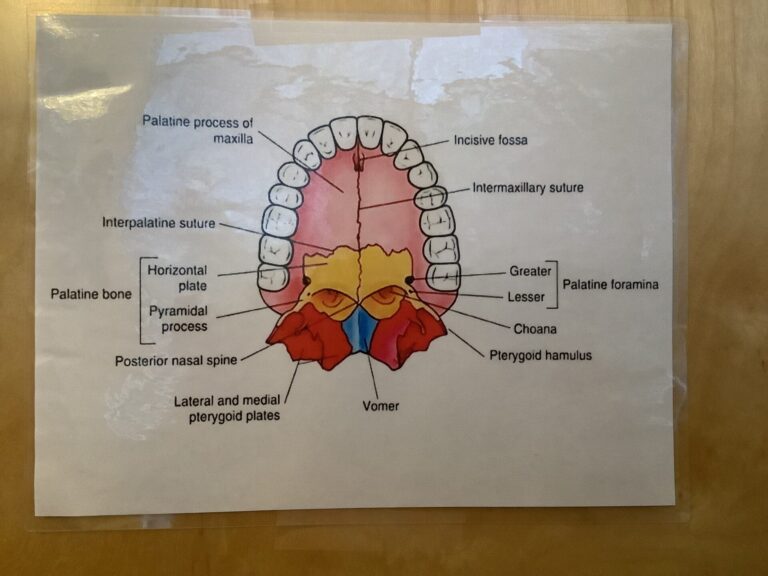
At the center of the skull sits a very important structure called the sphenoid.
This bone:
- Connects with many other cranial bones
- Helps form the base of the skull
- Influences the alignment and motion of the head and face
During birth, even in natural deliveries, the skull experiences significant pressure and molding.
This can sometimes create subtle patterns of tension or restriction in the cranial system—particularly around the sphenoid.
Why the Sphenoid Matters for Feeding and Reflux
The sphenoid is closely related to structures that influence:
- Jaw movement
- Tongue function
- Swallowing coordination
- Airway and breathing
When there is tension or reduced mobility in this area, it can impact how efficiently your baby:
- Latches
- Swallows
- Coordinates breathing and feeding
This is where oral function becomes incredibly important.
Oral Function and Feeding
Oral function refers to how well the structures of the mouth work together.
This includes:
- The tongue
- The jaw
- The palate
- The muscles involved in sucking and swallowing
If there is tension in these systems, feeding can become more challenging.
You may notice:
- Clicking while feeding
- Poor latch
- Frequent breaks during feeding
- Increased air intake
All of these can contribute to discomfort and symptoms often associated with reflux.
The Vagus Nerve Connection
Another key piece of the puzzle is the vagus nerve.
The vagus nerve is a major part of the parasympathetic nervous system and plays a role in:
- Digestion
- Heart rate
- Breathing
- Regulation
It travels from the brainstem, through the neck, and into the organs of the body.
If there is tension in the upper neck or cranial system, it may influence how effectively this nerve communicates.
When communication is not as efficient, we may see challenges in:
- Digestive function
- Regulation after feeding
- Overall comfort
Where Chiropractic Care Fits In
At One Village Family Chiropractic, we do not treat reflux as a condition.
Instead, we assess how the body is functioning as a whole.
This includes looking at:
- The movement of the spine
- The alignment and motion of the cranial system
- Patterns of tension affecting oral function and the nervous system
Using gentle approaches such as
Sacro-Occipital Technique (SOT),
along with cranial and tonal techniques, we work to:
- Reduce areas of tension
- Support nervous system communication
- Improve coordination within the body
Adjustments for babies are extremely gentle and specific, always adapted to their stage of development.
A Collaborative Approach
It’s important to say clearly:
Reflux is complex.
Care often works best when it is part of a team approach, including:
- Pediatricians
- Lactation consultants
- Other supportive providers
Our role is to support the structural and neurological side of function, so your baby’s body can operate with greater ease.
What Parents Often Notice
While every baby is different, families often report changes such as:
- Improved feeding coordination
- Less tension during and after feeds
- Greater ease with settling
- More comfort in their baby’s body
Sometimes these changes happen quickly.
Sometimes they unfold over time.
A Final Thought
Your baby is not broken.
Their body is adapting, learning, and developing in real time.
When we support the connection between the skull, nervous system, and body—especially areas like the sphenoid, oral function, and vagus nerve—we are simply helping that process happen more smoothly.
If you are in Edmonton and your baby is experiencing reflux, feeding challenges, or tension patterns, our team at One Village Family Chiropractic is here to support you.
The Role of the Sphenoid Bone
At the center of the skull sits a very important structure called the sphenoid.
This bone:
- Connects with many other cranial bones
- Helps form the base of the skull
- Influences the alignment and motion of the head and face
During birth, even in natural deliveries, the skull experiences significant pressure and molding.
This can sometimes create subtle patterns of tension or restriction in the cranial system—particularly around the sphenoid.
Why the Sphenoid Matters for Feeding and Reflux
The sphenoid is closely related to structures that influence:
- Jaw movement
- Tongue function
- Swallowing coordination
- Airway and breathing
When there is tension or reduced mobility in this area, it can impact how efficiently your baby:
- Latches
- Swallows
- Coordinates breathing and feeding
This is where oral function becomes incredibly important.
Oral Function and Feeding
Oral function refers to how well the structures of the mouth work together.
This includes:
- The tongue
- The jaw
- The palate
- The muscles involved in sucking and swallowing
If there is tension in these systems, feeding can become more challenging.
You may notice:
- Clicking while feeding
- Poor latch
- Frequent breaks during feeding
- Increased air intake
All of these can contribute to discomfort and symptoms often associated with reflux.
The Vagus Nerve Connection
Another key piece of the puzzle is the vagus nerve.
The vagus nerve is a major part of the parasympathetic nervous system and plays a role in:
- Digestion
- Heart rate
- Breathing
- Regulation
It travels from the brainstem, through the neck, and into the organs of the body.
If there is tension in the upper neck or cranial system, it may influence how effectively this nerve communicates.
When communication is not as efficient, we may see challenges in:
- Digestive function
- Regulation after feeding
- Overall comfort
Where Chiropractic Care Fits In
At One Village Family Chiropractic, we do not treat reflux as a condition.
Instead, we assess how the body is functioning as a whole.
This includes looking at:
- The movement of the spine
- The alignment and motion of the cranial system
- Patterns of tension affecting oral function and the nervous system
Using gentle approaches such as
Sacro-Occipital Technique (SOT),
along with cranial and tonal techniques, we work to:
- Reduce areas of tension
- Support nervous system communication
- Improve coordination within the body
Adjustments for babies are extremely gentle and specific, always adapted to their stage of development.
A Collaborative Approach
It’s important to say clearly:
Reflux is complex.
Care often works best when it is part of a team approach, including:
- Pediatricians
- Lactation consultants
- Other supportive providers
Our role is to support the structural and neurological side of function, so your baby’s body can operate with greater ease.
What Parents Often Notice
While every baby is different, families often report changes such as:
- Improved feeding coordination
- Less tension during and after feeds
- Greater ease with settling
- More comfort in their baby’s body
Sometimes these changes happen quickly.
Sometimes they unfold over time.
A Final Thought
Your baby is not broken.
Their body is adapting, learning, and developing in real time.
When we support the connection between the skull, nervous system, and body—especially areas like the sphenoid, oral function, and vagus nerve—we are simply helping that process happen more smoothly.
If you are in Edmonton and your baby is experiencing reflux, feeding challenges, or tension patterns, our team at One Village Family Chiropractic is here to support you.