
You might not think much about your posture until your neck feels tight by noon, your low back starts aching after errands, or you notice that standing up straight suddenly feels like effort. That is often where posture screening for adults becomes helpful – not as a judgment about how you stand, but as a window into how your body is adapting to daily stress.
For many adults, posture changes slowly. It can be shaped by desk work, pregnancy and postpartum demands, old injuries, long commutes, stress, strength imbalances, or simply years of repeating the same patterns. The body is smart and adaptable, but compensation has a cost. When one area starts doing more than it should, another area often starts feeling the strain.
A good posture screen is not about chasing a perfectly rigid position. It is about understanding alignment, balance, movement habits, and how your spine and nervous system may be responding. That is why it can be useful even if you are not in severe pain. Often, it gives context to the tension, fatigue, headaches, stiffness, or mobility changes you have been brushing off for months.
What posture screening for adults actually looks at
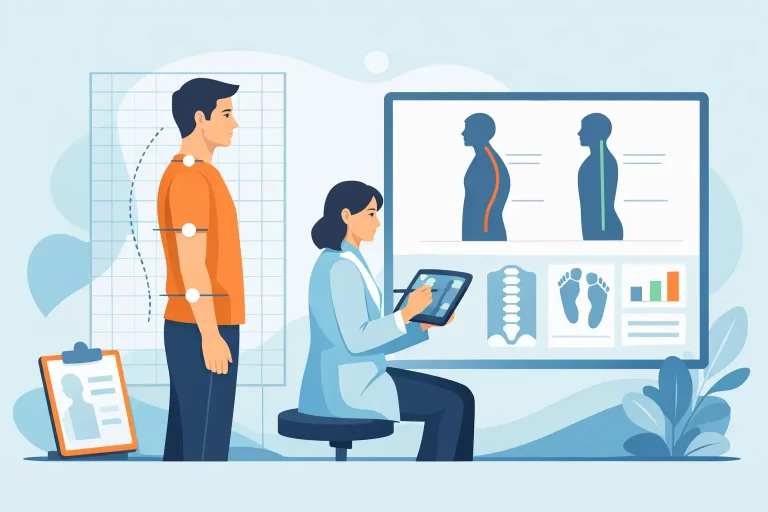
A posture screening for adults usually begins with observation. A practitioner looks at how your head sits over your shoulders, how your shoulders rest, whether your hips appear level, how your knees track, and how your feet support the rest of your body. From the side, they may assess whether your ears, shoulders, ribs, pelvis, knees, and ankles are stacking in a way that supports efficient movement.
This is not about finding one flaw and blaming it for everything. Human bodies are not symmetrical machines. Small differences are normal. What matters more is whether a pattern suggests ongoing stress, compensation, or reduced function.
A more complete screen may also include spinal curves, pelvic position, range of motion, balance, gait, and simple movement tests. In some practices, modern assessment tools can help measure changes more objectively over time. That matters because posture is not just visual. It reflects how your muscles, joints, ligaments, and nervous system are working together.
Why posture matters beyond appearance
Most adults who ask about posture are not trying to look more polished in photos. They want to feel better in their body. They want less tension, easier breathing, better mobility, fewer flare-ups, and more energy at the end of the day.
Posture influences how force moves through the body. If your head consistently sits forward, the muscles in your neck and upper back may work harder to support it. If your pelvis tips too far forward or backward, the low back and hips may absorb stress differently. If your shoulders round and your ribcage becomes restricted, even breathing mechanics can change.
This does not mean every posture pattern causes pain, and it does not mean pain is always caused by posture. That is an important distinction. Sometimes a person with obvious postural changes feels fine, while another with relatively mild changes feels a lot of discomfort. It depends on workload, nervous system sensitivity, recovery, strength, sleep, previous injury, and many other factors.
Still, posture can offer meaningful clues. It helps connect the dots between daily habits and the symptoms or limitations you are experiencing.
Common signs a screening may be worth considering
Adults often benefit from a posture screen when they notice recurring tightness in the neck, shoulders, hips, or low back. It can also be helpful if one shoulder seems higher, your shoes wear unevenly, you feel off balance, or you are dealing with frequent headaches, stiffness after sitting, or reduced range of motion.
It is also a sensible step during life transitions. Pregnancy, postpartum recovery, returning to exercise, starting a desk-based job, or recovering from injury can all shift the way your body organizes itself. In those seasons, early screening can catch patterns before they become more deeply ingrained.
Even if you are active and generally healthy, a posture screen can be useful as part of proactive wellness care. Sometimes the goal is not to solve pain. It is to improve efficiency, support resilience, and help your body move with less strain.
What a posture screen can reveal
One of the biggest benefits of screening is that it gives a clearer picture of what is happening beneath the surface. A forward head posture may reflect more than screen use. It could be tied to thoracic stiffness, shoulder restriction, breathing patterns, or compensations lower in the spine. A rotated pelvis may not just be a hip issue. It could involve foot mechanics, muscle imbalance, pregnancy-related changes, or old habits from a previous injury.
This is where individualized care matters. The same visible posture pattern can come from very different causes. That is why a thoughtful assessment should never lead straight to one generic exercise sheet or a blanket rule to just sit up straighter.
In a family-centred wellness setting, the conversation often goes deeper. How are you sleeping? How much time do you spend sitting? Are you carrying a baby on one side all day? Have you stopped walking because your hips feel tight? Are stress and tension keeping your body in a constant guarded state? These questions matter because posture is lived, not isolated.
What happens after the screening
A screening is a starting point, not the whole plan. Once patterns are identified, the next step is deciding what support makes sense for your body and your goals.
For some adults, that may mean gentle chiropractic care to help restore better spinal motion and reduce areas of restriction. For others, it may include corrective exercises, posture retraining, breathing work, changes to workstation setup, or simple movement habits that are easier to sustain than a perfect ergonomic overhaul.
The best plan is usually realistic. If you are a parent, a commuter, or someone balancing work and family life, your care should fit your actual day. Small consistent changes often matter more than ambitious plans that are impossible to maintain.
It is also worth saying that posture does not usually change overnight. Lasting change takes repetition, awareness, and support. That is not a flaw in your body. It is simply how adaptation works.
Posture screening for adults and long-term wellness
There is a reason posture screening for adults fits so well within a long-term wellness model. It helps shift the conversation from reacting to pain toward understanding function earlier. Instead of waiting until discomfort becomes constant, you have a chance to notice stress patterns while they are still manageable.
That approach can be especially valuable for adults who want to stay active, age well, and care for their families without feeling limited by stiffness or recurring strain. When your spine and supporting structures are under less stress, everyday tasks often feel easier. You may notice better body awareness, smoother movement, and less end-of-day tension.
At One Village Family Chiropractic, that kind of assessment is part of a bigger picture. The goal is not to force your body into an artificial ideal. It is to support alignment, nervous system function, and the natural resilience your body already has.
A few important realities
Not every postural issue needs aggressive treatment. Not every ache comes from alignment. And not every adult needs the same kind of care. Sometimes posture improves most through strengthening and movement variability. Sometimes hands-on care makes a meaningful difference. Often it is a combination.
There is also a difference between temporary posture and persistent posture patterns. Slouching on the couch at night is not a crisis. The concern is what your body does most of the time, how well you can move out of those positions, and whether certain patterns are linked to pain, restriction, or fatigue.
That is why a compassionate, individualized screen matters. It helps you understand what is normal, what may need support, and what practical next steps can help you feel more at ease in your body.
If your body has been giving you small signals – the recurring tight shoulders, the low back that always feels loaded, the sense that standing tall is harder than it used to be – a posture screen can be a gentle and informative place to start. Sometimes the first step toward healing is simply seeing your patterns clearly, with the right guidance and without blame.