
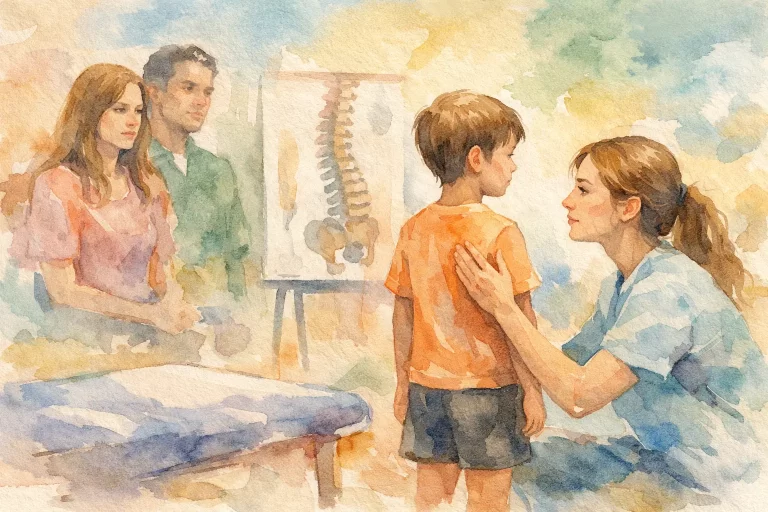
A school photo, a growth spurt, or a child who seems to lean into one shoulder can make a parent pause. Can children have posture screenings? Yes. A posture screening can be a gentle, age-appropriate way to look at how a child stands, sits, moves, and carries their growing body.
It is not about trying to make every child stand perfectly still or expecting adult posture from an active, developing child. Children move often, change quickly, and come in many healthy body shapes. A thoughtful screening looks for patterns that may be worth supporting, monitoring, or discussing further – always in the context of the child in front of us.
What is a posture screening for a child?
A posture screening is an observational assessment of alignment and movement. Depending on a child’s age and comfort, a practitioner may watch how they stand, walk, balance, bend, turn, or sit. They may also ask simple questions about sports, play, backpacks, screen use, sleep positions, recent growth, and any aches or stiffness the child has noticed.
The process should feel calm and approachable. For a younger child, it may look more like movement through play than a formal examination. For an older child or teen, it may include a conversation about school routines, training demands, or the habits that leave them feeling tired or uncomfortable at the end of the day.
At One Village Family Chiropractic, a child-centred assessment is individualized. We consider posture as one part of whole-body function, alongside mobility, coordination, comfort, daily routines, and the demands placed on a growing spine and nervous system.
Why posture can change so quickly during childhood
Growth is not always even or predictable. A child may suddenly grow taller, develop new movement habits, start a sport, carry heavier school materials, or spend more time at a desk. During these transitions, they may need time and support to feel coordinated in their changing body.
Posture is also dynamic. The way a child sits during a long class may look very different from the way they run, climb, or play. A rounded upper back while concentrating on a tablet does not automatically mean something is wrong. Likewise, one shoulder appearing a little higher in a photo is not enough on its own to draw conclusions.
That is why screenings are most useful when they focus on patterns rather than snapshots. Is the child consistently avoiding a movement? Do they seem uncomfortable after certain activities? Is there a recurring lean, unevenness, or loss of ease that parents have observed over time? These details help guide a more meaningful conversation.
When should parents consider a posture screening?
There is no single “right age” for a posture screening. Some families choose one as part of proactive wellness care, particularly during periods of rapid growth or before a busy sports season. Others seek an assessment because they have noticed a change in how their child moves or carries themselves.
A screening may be worth considering if your child frequently complains of neck, back, shoulder, hip, or leg discomfort; seems stiff after sitting, gaming, reading, or training; regularly carries a backpack on one shoulder; or has had a fall, collision, or sports injury. It can also be useful when a child’s movement seems less comfortable or confident than usual.
For teens, posture concerns are often tied to long school days, part-time work, training, and increased screen time. The goal is not to shame them for slouching. It is to help them understand how regular movement breaks, strength, sleep, and well-fitted equipment can support their body through a demanding stage of life.
When a screening is not enough
A posture screening is not a substitute for medical assessment when symptoms are significant or concerning. Contact your child’s family physician or seek timely medical care if there is severe or persistent pain, pain that wakes them from sleep, unexplained weakness, numbness or tingling, fever, unexplained weight loss, or changes in bowel or bladder control.
If a practitioner sees something that needs further investigation, the appropriate next step may be referral or co-management with another qualified health professional. Good care means knowing when to observe, when to support, and when to investigate further.
What happens during a gentle assessment?
Parents often worry that a posture assessment will feel intimidating or that their child will be expected to cooperate perfectly. It should not be either. A skilled practitioner meets children where they are, explains each step in simple language, and respects their comfort level throughout the visit.
The assessment may begin with a health history and a parent’s observations. Then, the practitioner may look at standing posture from different angles and assess comfortable ranges of motion. They may observe walking, balancing on one foot, squatting, reaching, or other simple movements that offer clues about coordination and mobility.
For some children, modern assessment tools may help document changes over time. Used appropriately, these tools can provide useful information, but they do not replace clinical judgement or the child’s lived experience. Numbers and images are only helpful when they lead to a clear, individualized plan.
If care is recommended, it should be explained in plain language. Parents should understand the purpose of any recommendation, the expected approach, and how progress will be reviewed. Gentle chiropractic care, movement guidance, and practical changes to daily routines may all be considered depending on the child’s needs.
A screening is about function, not perfect posture
There is a lot of pressure on parents to correct every habit. But healthy development does not require a child to sit upright all day or maintain one rigid position. Bodies are built to move. The most supportive posture is often the next posture – a change of position, a stretch, a walk to refill a water bottle, or a few minutes of active play.
Instead of asking, “How can I get my child to stop slouching?” it can be more helpful to ask, “Does my child have enough opportunities to move comfortably throughout the day?” This shift creates room for encouragement rather than criticism.
A child who enjoys climbing, dancing, biking, swimming, kicking a ball, or simply playing outdoors is practising varied movement. These experiences can support body awareness, strength, balance, and confidence. Structured exercise can be valuable too, but it does not have to be complicated to be meaningful.
Simple ways to support posture at home
Small environmental changes can make daily life easier on growing bodies. Encourage your child to use both backpack straps and adjust the bag so it sits close to their back. Help them choose a study space where their feet are supported and the table height is workable, while remembering that frequent movement matters more than a flawless desk setup.
Build short movement breaks into screen time and homework. A few minutes of walking, stretching, dancing, or active play can be more realistic than asking a child to hold a “good posture” position for an hour. For young children, make it playful. For teens, connect it to what matters to them, whether that is feeling better after practice, concentrating during homework, or being more comfortable while gaming.
Sleep also deserves attention. Children need a pillow and sleep setup that feels comfortable and supports restful positioning, but there is no universal pillow or mattress that fits every child. If they regularly wake with stiffness or discomfort, it is worth discussing their setup as part of a broader assessment.
Helping your child feel confident in their body
The language adults use around posture matters. Comments such as “stand up straight” can be well intended, yet repeated correction may make a child feel self-conscious. Try neutral, supportive cues instead: “Let’s take a movement break,” “How does your body feel after sitting?” or “Want to stretch with me?”
A posture screening can give families useful information, but it is only one moment in a child’s ongoing growth story. The most valuable outcome is not a perfect posture score. It is helping your child build awareness of their body, trust that discomfort deserves attention, and feel supported as they move through each new stage of growing.