
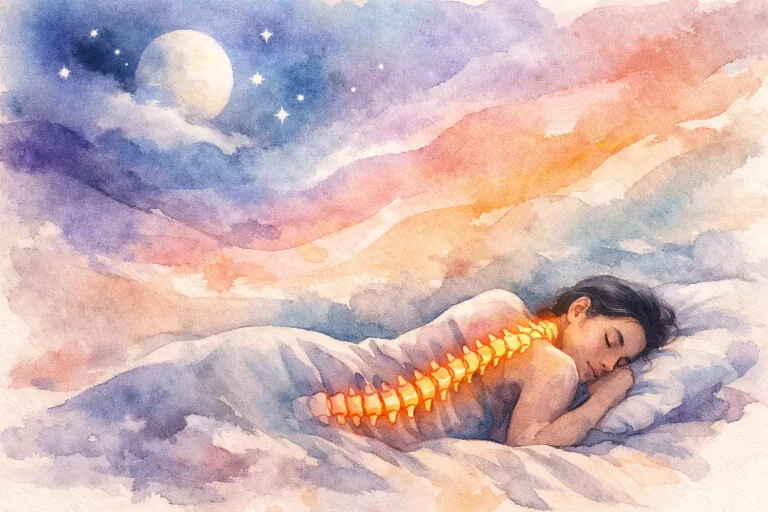
That familiar moment when you are tired but cannot get comfortable can feel deeply frustrating. Can spinal tension affect sleep? It certainly can. When the muscles and joints around your spine feel stiff, guarded, or irritated, finding a position that feels restful may become harder. You may wake when you roll over, struggle to settle your shoulders and hips, or start the day feeling as though you barely rested at all.
Sleep is not simply a switch that flips when your head reaches the pillow. Your body needs enough physical comfort, a sense of ease, and a supportive sleep environment to move through its natural sleep cycles. For many adults, and especially for busy parents, pregnancy patients, and people who spend long hours sitting or lifting, spinal tension can become one part of a larger pattern that keeps restorative rest out of reach.
How spinal tension can affect sleep
Spinal tension is a broad, everyday term. It may describe tight muscles along the neck, upper back, or low back; stiffness in the joints; or the protective muscle guarding that can develop after repetitive strain, an awkward movement, or a period of stress. It does not always mean there is a serious injury. Still, it can change how your body feels when it is time to lie down.
Discomfort is the most direct connection. A sore low back may ache when you lie flat. Neck tension may make side sleeping uncomfortable or lead you to wake with a headache. Tightness through the upper back and shoulders can make it difficult to find a pillow height that supports your head without forcing your neck into an awkward angle.
There is also the issue of movement. Healthy sleep includes small, normal position changes throughout the night. If turning in bed feels restricted or painful, those movements can partially wake you. You may not remember every wake-up, but repeated disruptions can leave you feeling unrefreshed in the morning.
Finally, tension and sleep often reinforce each other. Poor sleep can make muscles feel more sensitive and less resilient the next day. In turn, discomfort can make the following night more difficult. The goal is not to blame every restless night on your spine, but to notice whether your physical comfort is contributing to the pattern.
Why the tension may be showing up at bedtime
Your body carries the demands of the day. Hours at a computer, commuting, feeding a baby, carrying a toddler, working overhead, training hard, or simply moving less than usual can all leave certain areas working overtime. By evening, the muscles that helped hold you upright may feel tired and protective.
Stress can add another layer. When life feels demanding, many people unknowingly hold their shoulders up, clench their jaw, brace their abdomen, or breathe more shallowly. This is a normal protective response, but when it becomes your default, your body may have trouble shifting into a more settled state at night.
Your sleep setup matters too. A mattress does not need to be extremely firm or extremely soft to be “good.” What matters is whether it supports your body in your usual sleeping position. A mattress that sags can allow the hips to drop and place the low back in an uncomfortable position. One that is too firm for your body may create pressure at the shoulder or hip, prompting more tossing and turning.
Pillows are equally personal. The right pillow for a back sleeper is often different from the right pillow for a side sleeper. If your pillow is too high, too flat, or too worn out, your neck may spend hours angled away from a neutral, comfortable position.
Sleep position can change the pressure points
There is no single “best” sleep position for every person. Back sleeping may feel comfortable for someone with a well-supported neck and knees, while side sleeping may be more comfortable for someone who benefits from a pillow between the knees. Stomach sleeping can be challenging for the neck because the head typically remains turned for a long period, but habits are not changed overnight.
Rather than forcing a position that feels unnatural, experiment with small supports. A pillow between the knees can reduce strain through the hips and low back for side sleepers. A thin pillow or cushion under the knees may help some back sleepers feel less pull through the low back. The key is comfort, not perfection.
Gentle ways to support your body before bed
A bedtime routine does not have to be elaborate to be useful. Consistency and gentleness tend to go further than an intense late-night workout or aggressive stretching. If spinal tension is part of your sleep challenge, try a few small changes for one to two weeks and pay attention to what shifts.
- Take a short, easy walk after dinner or spend a few minutes moving through comfortable range of motion. Gentle movement can help reduce the “stuck” feeling that builds after a day of sitting.
- Use warmth if it feels good for you. A warm shower, bath, or heating pad used safely and according to its instructions can help muscles feel more at ease before bed.
- Create a brief wind-down period away from work, scrolling, and household tasks. Slow breathing, quiet reading, or a simple stretch routine can signal that the day is changing pace.
- Check your pillow and mattress honestly. If you consistently wake with neck pain, shoulder pressure, or low-back stiffness, the setup may need adjustment rather than more effort from your body.
Keep stretches comfortable and controlled. You should not need to push into sharp pain, numbness, or a strong pulling sensation to get results. For many people, a few relaxed movements done regularly are more sustainable than a long routine done once.
Daytime habits still count
What happens at 2 p.m. can affect how you feel at 2 a.m. If your work keeps you seated, build in brief position changes. If you repeatedly lift children, laundry baskets, or equipment, consider how close you can keep the load to your body and whether you are sharing the work between both sides.
Strength, mobility, and recovery all have a role, but the right approach depends on your body, health history, activity level, and current symptoms. A personalized plan is often more helpful than copying a generic exercise video, particularly when pain has been ongoing.
When to seek professional guidance for spinal tension and sleep
If your sleep is regularly disrupted by neck, back, or hip discomfort, an assessment can help clarify what may be contributing. At One Village Family Chiropractic, care begins with listening to your experience, understanding your movement patterns and goals, and considering a gentle, individualized approach to musculoskeletal health. Chiropractic care may be one option for addressing spinal joint and muscle concerns that are affecting your comfort and daily function.
It is also wise to speak with a primary care provider if sleep problems persist even when pain is not the main issue. Sleep can be influenced by many factors, including breathing concerns, medication effects, hormonal changes, mood, illness, and sleep habits. A whole-person view helps ensure the right concern is receiving the right support.
Seek prompt medical attention for back or neck pain following significant trauma, new or worsening weakness, numbness that is persistent or spreading, changes in bladder or bowel control, fever with severe back pain, unexplained weight loss, or pain that is severe and unrelenting. These symptoms deserve timely medical assessment.
A more supportive way forward
Your body is not failing you because it needs support. Restless nights can be a useful invitation to look at how you move, recover, manage daily demands, and set up your sleep space. Start with one gentle change, stay curious about what your body responds to, and ask for care when discomfort is keeping you from the rest you need. Small, consistent support can help create more comfortable nights and steadier days.