
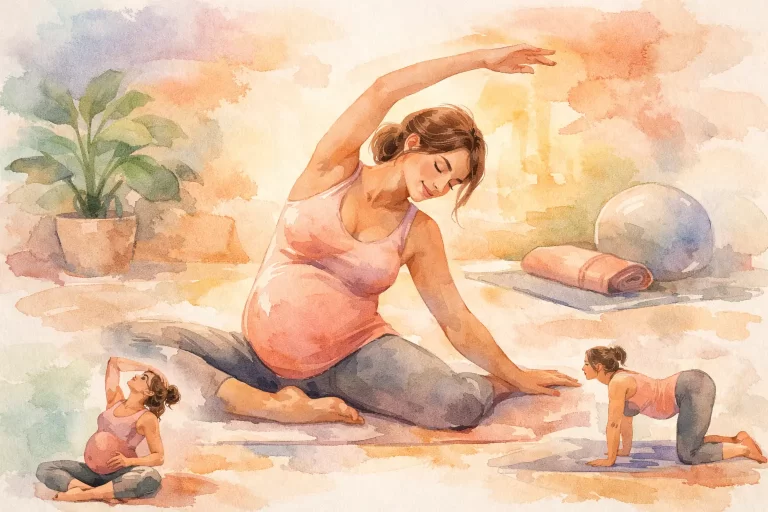
Your body does not need to move exactly as it did before pregnancy to move well. Pregnancy mobility exercises are an opportunity to stay connected to your changing body, ease into everyday movements with more confidence, and create small moments of care in a season that asks a lot of you.
As your centre of gravity shifts and your joints, muscles, and breathing patterns adapt, familiar activities such as rolling out of bed, getting up from the sofa, walking the dog, or carrying groceries can feel different. Gentle, intentional movement can help you notice where your body feels supported and where it may be asking for a little more attention.
Why mobility matters during pregnancy
Mobility is not about stretching as far as possible. It is your ability to move your joints and tissues with control through a comfortable range of motion. During pregnancy, that may mean being able to rotate your upper back when reaching for a seatbelt, move your hips comfortably during a walk, or take a fuller breath without bracing through your shoulders.
Pregnancy can bring changes in posture and load through the spine, pelvis, hips, rib cage, and feet. The growing abdomen may encourage the upper back and shoulders to round forward, while the low back and hip muscles work differently to support changing movement demands. Some people feel stiff; others feel unusually flexible. Both experiences call for awareness rather than pushing harder.
Regular mobility work may support comfortable movement, body awareness, and a more balanced approach to daily activity. It is also a practical way to pause, breathe, and check in with how you are feeling. The goal is not to force a position or chase a fitness milestone. The goal is to help your body move with steadiness and ease.
Before you begin pregnancy mobility exercises
Every pregnancy is individual. Before starting or changing an exercise routine, speak with your midwife, physician, or other qualified prenatal care provider, especially if you have been advised to limit activity or have symptoms that concern you.
Choose a time when you are reasonably hydrated and not overly fatigued. Wear comfortable clothing, keep water nearby, and use a wall, chair, pillows, or yoga blocks for support when needed. A good rule is that movement should feel smooth and manageable. Mild muscular effort can be normal, but sharp pain, increasing pelvic pressure, dizziness, chest pain, shortness of breath that does not settle with rest, vaginal bleeding, fluid leakage, or regular painful contractions are reasons to stop and seek medical guidance promptly.
Pregnancy is also not the time to test your maximum flexibility. Hormonal changes can affect how supported some joints feel, so long, intense stretches or deep end-range positions may feel good briefly but leave you less comfortable afterward. Work in a range that feels stable. Slow breathing and control are more useful than depth.
A gentle mobility routine for changing days
A short routine done consistently can be more helpful than an occasional long session. Try these movements once a day or a few times each week, adjusting the number of repetitions to your energy level. If one movement does not feel right in your body, skip it. There is no prize for completing every exercise.
1. Supported 360-degree breathing
Sit upright in a chair or on a cushion with your feet supported. Place your hands around the sides of your lower rib cage. Inhale gently through your nose and imagine your ribs widening into your hands, including through the back of your body. Exhale slowly and allow your shoulders and jaw to soften.
Take five to eight unhurried breaths. This is not about taking the biggest breath possible. It is about allowing the rib cage, diaphragm, abdomen, and pelvic floor to move in a coordinated, relaxed way. It can be particularly helpful after a long period of sitting or when you notice yourself holding tension in your neck and shoulders.
2. Seated pelvic rocks
Sit near the front of a firm chair with both feet on the floor. Slowly tip your pelvis forward so your low back gently arches, then tip it backward so your low back rounds slightly. Keep the movement small and comfortable. Your upper body can stay relaxed.
Repeat eight to 12 times, moving with your breath. This simple exercise can help you explore movement through the pelvis and low back without requiring you to get down onto the floor. If you spend much of the day at a desk, this is an easy movement break between meetings or school pickup.
3. Cat-cow with a neutral starting point
Come onto hands and knees with your hands beneath your shoulders and knees beneath your hips. If your wrists are sensitive, place your hands on the seat of a sturdy chair or countertop instead. Start with a long, neutral spine. As you exhale, gently round through your upper and mid-back. As you inhale, return toward neutral and allow a small, comfortable opening across the chest.
Repeat six to 10 times. Keep the movement fluid rather than dramatic, and avoid dropping heavily into the low back. This variation can be a welcome reset for the spine, shoulders, and hips after sitting, driving, or sleeping in an unfamiliar position.
4. Supported hip circles
Stand beside a counter or the back of a sturdy chair, holding on lightly. Place your feet about hip-width apart and make slow circles with your pelvis, as though you are tracing the edge of a small bowl. Complete five circles in each direction.
Keep your knees soft and let the movement be as small as needed. Hip circles can reveal whether one direction feels more restricted or less steady. That information is useful. It is not something to push through. On days when standing feels tiring, return to seated pelvic rocks instead.
5. Gentle thoracic rotation
Sit tall in a chair, with your knees and feet facing forward. Cross your arms lightly over your chest or rest your hands on your shoulders. Exhale and slowly rotate your rib cage to one side without forcing the movement. Inhale back to centre, then repeat on the other side.
Try five to eight repetitions per side. Much of the rotation in this exercise should come from the upper and middle back, not from twisting deeply through the low back. Comfortable upper-back mobility can make reaching, driving, and finding a supported position in bed feel less restricted.
6. Supported calf and ankle movement
Stand facing a wall or counter and place both hands on it. Step one foot back, keeping the heel comfortably heavy, then gently bend and straighten the back knee a few times. Switch sides. You can also hold the counter and slowly rise onto your toes, then lower with control.
The feet and ankles carry changing demands throughout pregnancy, yet they are easy to overlook. Keeping them moving may make walks and standing tasks feel more manageable. If you notice swelling, pain, or a sudden change in one leg, contact your healthcare provider rather than trying to exercise through it.
Make mobility fit real life
The most sustainable plan is the one that respects your capacity. Some days, a 10-minute routine may feel restorative. Other days, three slow breaths, a few pelvic rocks, and a short walk around the house may be enough. Fatigue, sleep, work, caring for other children, and how your body is feeling all matter.
Try attaching movement to routines you already have. Take a few rib-expanding breaths after brushing your teeth. Do hip circles while the kettle boils. Use gentle upper-back rotations after time at a computer. Small doses help movement become part of your day rather than another item on an already full list.
If walking is part of your routine, consider comfort over distance. Supportive footwear, shorter routes, a slower pace, and planned rest breaks can make a meaningful difference. If a particular activity consistently increases discomfort later that day or the next morning, scale it back and speak with your care team about what may be more appropriate for you.
When personalized support can help
General movement guidance is useful, but persistent back, hip, pelvic, neck, or rib discomfort deserves individual attention. So does a feeling that your body is compensating, guarding, or becoming less confident with ordinary movement. A prenatal-focused assessment can look at posture, spinal and joint mobility, muscle tension, movement habits, and the ways your daily life is placing demand on your body.
At One Village Family Chiropractic, prenatal care is gentle and individualized, with an emphasis on helping you understand your body and move with greater comfort and confidence. Care recommendations should always reflect your pregnancy, your health history, your goals, and the guidance of your broader prenatal healthcare team.
Let mobility be a conversation with your body, not a demand placed on it. A few patient, supported movements can be a meaningful way to care for yourself while your body does extraordinary work.