
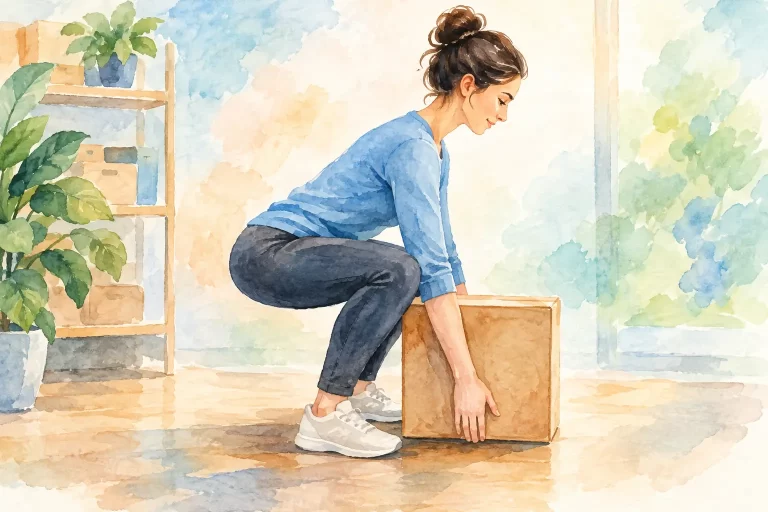
A laundry basket on the stairs, a toddler asking to be picked up, a case of water from the car, or a box at work can all ask more of your body than you expect. This guide to ergonomic lifting techniques is designed to help you move everyday loads with greater awareness, reduce unnecessary strain, and build confidence in how your body works.
Good lifting is not about proving how much you can carry. It is about creating a stable, supported position before the load leaves the ground, then recognizing when the load, the space, or your energy level calls for a different plan. For many Edmonton families, that shift in approach can make daily movement feel less intimidating and more sustainable.
Why ergonomic lifting techniques matter
Your spine is built to move, bend, and carry load. Problems often arise when a load is heavy, awkward, held far from the body, or lifted quickly while you are tired, rushed, or twisted. The tissues around the spine, including muscles, joints, and connective tissue, work together to transfer force. When that system is asked to compensate in a poor position, discomfort can follow.
Ergonomic lifting does not mean keeping your back perfectly rigid or avoiding every bend. It means using your hips and legs effectively, keeping the load close, maintaining control, and adapting the task to the body you have that day. A safe technique for a light grocery bag may not be the right approach for a heavy storage bin or a child who suddenly shifts their weight.
This matters even more when you are recovering from an injury, managing recurring back or hip discomfort, returning to activity after a period of less movement, or navigating the physical changes that can come with pregnancy and early parenthood. Your capacity can vary from one day to the next. Listening to those changes is a strength, not a limitation.
A practical guide to ergonomic lifting techniques
Before you lift, pause for a moment. Look at the load, notice the route you need to travel, and ask whether it is reasonable to move alone. That brief check can prevent the common mistake of committing to a lift before you know how heavy or unstable it is.
1. Set up the space and the load
Clear tripping hazards and make sure you have a place to set the item down. If a box has no handles, is wet, or has an uneven weight distribution, treat it as more demanding than its size suggests. Test the weight by gently shifting or lifting one edge first.
Whenever possible, divide a large load into smaller ones. Move items closer to waist height before lifting, use a cart for longer distances, or ask someone to share the task. These are not shortcuts. They are smart ergonomic decisions that preserve your energy and reduce needless strain.
2. Get close before you bend
Stand with your feet about hip-width apart, with one foot slightly ahead of the other if that feels more stable. Bring your body close to the object. The farther a load sits from your torso, the more force your back and shoulders must manage.
Rather than reaching forward from the waist, bend through your hips and knees. Think of sending your hips back as you lower toward the object, while keeping your chest comfortably open. Your back does not need to be stiff or forced into an exaggerated arch. Aim for a supported, controlled position that feels natural for your body.
3. Find a secure grip and gently brace
Use both hands when you can, and hold the object securely before beginning to rise. For an awkward item, take time to find the best hand placement rather than grabbing and going.
A gentle abdominal brace can help create stability. Imagine preparing for a light tap to your midsection, then continue breathing normally. Holding your breath may make a brief, maximal effort feel stronger, but it can also increase tension and is not appropriate for everyone. Slow, steady breathing and a controlled lift are usually the better choice for everyday tasks.
4. Rise through your legs and hips
Press through your feet and stand by allowing your knees and hips to straighten together. Keep the load close to your body as you rise. Your legs and hips are powerful contributors to a lift, especially when the object starts near the floor.
Avoid jerking the load upward. If it will not move smoothly, set it down and reassess. The item may be heavier than expected, caught on something, or simply not a one-person lift. Pushing through a warning sign is rarely worth it.
5. Turn with your feet, not your torso
Twisting while holding a load is one of the most common ways a manageable task becomes irritating for the back. If you need to change direction, take small steps and pivot your whole body. Keep your hips, shoulders, and feet moving together as much as possible.
This is especially useful in tight spaces, such as loading a vehicle, putting groceries away, or moving laundry around a crowded home. If the room does not allow you to turn properly, change the setup. Move the item in stages or reposition before lifting.
6. Lower with the same care you used to lift
The job is not finished when the item is off the floor. Keep it close, bend through your hips and knees, and lower it under control. Avoid reaching forward to place a load on a low shelf or the floor. Step closer first.
If you are lifting something into a higher space, keep the weight modest. Repetitive lifting above shoulder height can place extra demand on the shoulders, neck, and upper back. A step stool, a lower storage solution, or help from another person may be the more supportive option.
Everyday lifting looks different for every family
Parents and caregivers lift in ways that are rarely predictable. A child may want to be carried from an awkward angle, squirm while being lifted, or need help getting into a car seat. Whenever possible, get close, encourage the child to climb or assist when age-appropriate, and bring them toward the centre of your body before standing. Avoid reaching into a crib or vehicle with your arms extended for longer than necessary.
During pregnancy, a changing centre of gravity and shifts in energy can make familiar tasks feel different. It may help to widen your stance, reduce the size of each load, avoid sudden twisting, and ask for help earlier than you normally would. Individual needs vary, so speak with your healthcare provider if lifting is causing pain, pressure, dizziness, or uncertainty.
At work, the best solution is often not better body mechanics alone. Repeated lifting may call for a redesigned workstation, adjustable surfaces, carts, team lifts, scheduled breaks, or a conversation with your supervisor about safer handling practices. Technique matters, but the environment matters too.
Common lifting habits to rethink
Many people have heard, “lift with your legs, not your back.” While the message is well intended, it can become too simplistic. Your back is involved in lifting, and it benefits from gradual strength and movement. The goal is not to eliminate back involvement, but to avoid placing it under sudden, poorly controlled demand.
Try to move away from rushed bending, lifting while reaching, carrying an item on one side for too long, and twisting to unload it. Also be cautious about lifting when you are fatigued or distracted. A few extra trips may be frustrating, but they can be far kinder to your body than one overloaded trip.
Regular movement can support lifting tolerance over time. Walking, comfortable mobility work, and strength exercises that build the hips, legs, trunk, and upper body can all be useful when chosen for your current ability. The right starting point depends on your health history, goals, and how your body responds to activity.
When discomfort deserves professional support
Mild muscle soreness after an unfamiliar task can happen, particularly when you have done more than usual. However, pain that is sharp, worsening, persistent, or repeatedly triggered by ordinary lifting deserves attention. Numbness, tingling, weakness, pain travelling into an arm or leg, changes in balance, or symptoms following a fall or accident should be assessed promptly by an appropriate healthcare professional.
A personalized assessment can help identify movement patterns, mobility restrictions, strength gaps, and daily habits that may be contributing to discomfort. At One Village Family Chiropractic, care is approached with the understanding that your body is connected and capable of building greater resilience with the right support, education, and plan.
You do not need to wait for a dramatic injury to start moving more thoughtfully. The next time you reach for a box, a child, or a basket, give yourself permission to pause, get close, and choose the option that helps your body feel supported.