
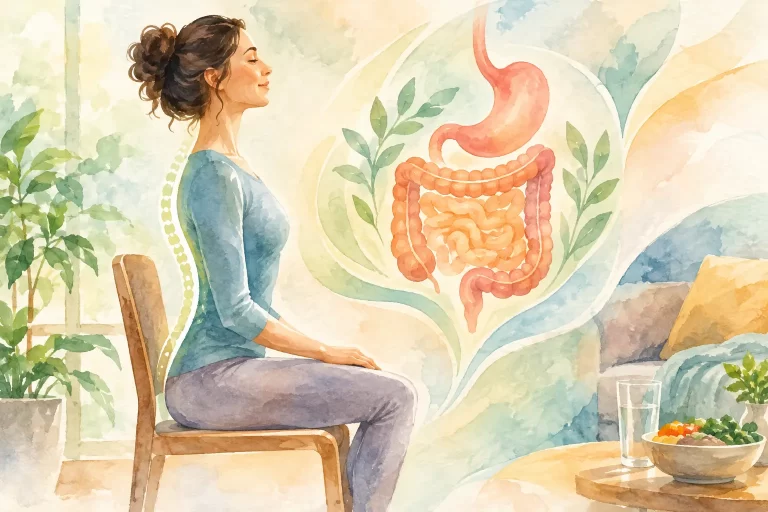
A large meal, a long drive home, then an hour folded over a phone or laptop can be an uncomfortable combination. Many people notice that their stomach feels fuller, tighter, or more unsettled when they are slouching. Understanding how posture affects digestion can help you make small, realistic changes that support greater comfort through your workday, family routines, and meals.
Posture is not about holding yourself perfectly rigid. It is about having enough options to move, breathe, and sit or stand with less strain. Your digestive system is complex, and posture is only one piece of the picture. Still, the way your rib cage, abdomen, pelvis, and spine are positioned can influence the physical space and pressure around your stomach and intestines.
How posture affects digestion after meals
When you sit tall in a relaxed, supported position, your diaphragm has room to move as you breathe and your abdomen is less compressed. When you collapse forward, especially after eating, your torso becomes shorter at the front. This can increase pressure through the abdomen and make it harder to feel comfortable while your body is processing a meal.
For some people, this may contribute to a sensation of fullness, bloating, burping, or reflux-like discomfort. Lying down soon after eating can be another trigger, particularly for people who are already prone to heartburn. The issue is not that one slouched position suddenly stops digestion. Rather, frequent compression, shallow breathing, and limited movement may make an existing tendency toward digestive discomfort more noticeable.
Your body also does not digest on a strict schedule. Food choices, meal size, hydration, stress, medications, sleep, hormone changes, activity level, and certain medical conditions can all affect how you feel after eating. If symptoms are frequent or disruptive, posture adjustments are a helpful support, not a substitute for medical assessment.
The role of breathing and abdominal pressure
Your diaphragm is your primary breathing muscle. It sits beneath the lungs and moves with every breath, sharing space and connective relationships with the structures of the upper abdomen. A relaxed, full breath creates gentle movement through the rib cage and abdominal wall.
In a hunched position, people often shift into shorter, upper-chest breaths. This is especially common when we are focused, rushed, stressed, or trying to manage a busy household from a chair that does not fit well. Shallow breathing does not cause every digestive complaint, but it can keep the body feeling braced and tense. That tension may make post-meal discomfort feel more intense.
Try this instead of forcing a military-style posture: let your feet rest on the floor, allow your shoulders to soften, and imagine length through the crown of your head. Then take a few slow breaths that expand the lower ribs and abdomen without straining. The goal is ease, not perfection.
Sitting, standing, and lying down: what tends to feel best?
There is no single ideal position for every body. A person with a short torso, a recovering injury, pregnancy-related body changes, or ongoing back pain may need a different setup than someone else. Comfort and variety matter more than trying to maintain one posture all day.
After a meal, upright sitting or an easy walk often feels better than curling into the couch. If you need to sit, choose a chair that supports your back rather than perching at the edge of a low, soft seat. Keep both feet supported when possible, and avoid leaning heavily forward over a screen.
Standing can also be helpful, but standing stiffly for long periods is not the answer. Shift your weight, take short walks, and give your body regular movement breaks. Gentle movement can reduce the sense of being stuck or compressed after hours at a desk, in a vehicle, or carrying a child.
If you experience nighttime heartburn, speak with a qualified health professional about strategies that may be appropriate for you. Some people find that remaining upright for a period after dinner and adjusting their sleep position helps, but recurring symptoms deserve individualized guidance.
Why everyday posture habits add up
Most posture stress is not created by one imperfect moment. It builds through repetition. Think of the parent feeding a baby while twisting toward the arm of the couch, the student studying with their chin close to a laptop, or the office worker taking calls with a phone tucked between shoulder and ear. These positions are understandable, but when they become the default, the body has fewer chances to reset.
A forward-head position and rounded upper back can also be linked with neck, shoulder, and mid-back tension. When discomfort is present, it is natural to move less, brace more, and take shallower breaths. This can create a cycle where the body feels increasingly guarded, including around the abdomen.
That is why a whole-body approach is so useful. Instead of asking, “What is the one perfect posture?” ask, “How can I change positions more often, breathe more freely, and make my environment work better for me?”
Small adjustments that are worth trying
You do not need an elaborate wellness routine to begin. Start with one or two changes you can repeat consistently:
- Take a relaxed five- to 10-minute walk after meals when your schedule allows.
- Set up screens closer to eye level so you are not repeatedly folding your neck and upper body forward.
- Use a chair with support behind your lower back, or place a small cushion there if it feels comfortable.
- Pause every 30 to 60 minutes to stand, reach, or walk to another room.
- Give yourself a few minutes to eat without rushing, driving, or scrolling whenever possible.
These habits are not rules to follow perfectly. They are invitations to notice what your body responds to. A short walk may feel wonderful for one person and uncomfortable for another after a large meal. Start gently and adjust based on your own symptoms, mobility, and energy.
Posture during pregnancy and family life
Pregnancy can bring meaningful changes to balance, spinal curves, breathing mechanics, and the way sitting positions feel. As the abdomen grows, many people naturally lean back or round forward to find a comfortable centre of gravity. Meals may feel different too, especially when there is less room in the abdomen later in pregnancy.
Comfort-focused strategies can help: use pillows for support, choose smaller meals if that suits you, and avoid staying in one position for too long. A gentle walk, supportive footwear, and a well-arranged workstation can make day-to-day movement feel more manageable. Always discuss persistent digestive symptoms, severe discomfort, or concerns during pregnancy with your maternity care provider.
Parents and caregivers can also benefit from looking at the positions they repeat while feeding, lifting, soothing, and playing with children. Bring the child or feeding pillow closer to you rather than curling your body down toward them. Change sides when appropriate, and make use of armrests or cushions. Small supports can reduce the accumulated strain of caring for others.
When to seek medical advice
Occasional fullness or discomfort after a rushed meal is common. However, do not assume persistent digestive symptoms are only a posture issue. Contact a medical professional if you have ongoing or worsening heartburn, difficulty swallowing, repeated vomiting, unexplained weight loss, black or bloody stools, severe abdominal pain, chest pain, fever, or symptoms that wake you regularly at night.
It is also reasonable to ask for guidance when digestive discomfort is affecting your eating, sleep, work, or quality of life. A clinician can help you consider possible causes and next steps. If back, neck, or postural discomfort is making it difficult to move comfortably, a chiropractor can assess your musculoskeletal needs and help you build an individualized plan focused on mobility, posture, and everyday function. At One Village Family Chiropractic, that conversation starts by listening to how your body feels in the real moments of your day.
Your body does not need perfect posture to function well. It benefits from support, movement, and the freedom to change positions. A little more room to breathe and move after meals can be a gentle, practical way to care for yourself.