
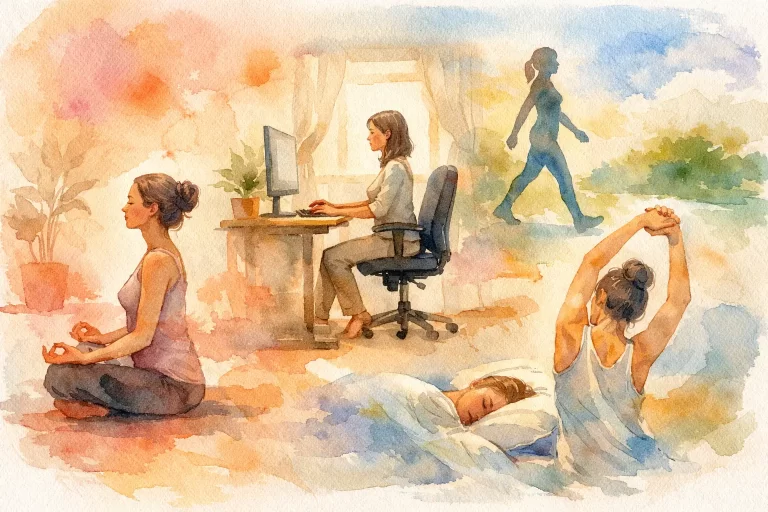
A child leaning over a tablet, a parent feeding a baby on the couch, and an adult answering emails at the kitchen table may look like very different situations. Yet each can place the body in one position for longer than it was designed to stay there. The best habits for healthy posture are not about sitting perfectly still or forcing your shoulders back all day. They are small, repeatable ways to give your spine, muscles and nervous system more variety, support and opportunity to move.
Posture is also more personal than many people realize. Your work demands, sleep, stress level, past injuries, pregnancy, fitness, home setup and daily responsibilities all shape how your body feels. A helpful posture routine should support your real life, not add another impossible standard to it.
Healthy posture starts with movement, not perfection
There is no single “correct” posture that must be held from morning to night. Even a well-arranged workstation can become uncomfortable if you remain there for hours. The body generally responds well to frequent, comfortable changes in position: sitting, standing, walking, reaching, squatting, resting and changing your visual focus.
Rather than asking, “Am I sitting straight enough?” try asking, “How long have I been in this position?” That question creates a more sustainable habit. Set a gentle reminder to stand, refill your water, walk to another room or do a few easy movements every 30 to 60 minutes. The right interval depends on your day, but regular movement breaks often matter more than achieving a picture-perfect seated pose.
This applies to children, too. Many children naturally move often when they have room to play, climb and change activities. Long stretches of screen time can reduce that variety. Short movement breaks between schoolwork, games or shows can make the day feel better without turning posture into a source of worry.
1. Build a workstation around your body
A workstation should fit the person using it, not the other way around. When your screen is too low, your chair is too high or your feet are unsupported, your body may gradually adapt by rounding, reaching or tensing. These positions are common, especially in home offices, but they are worth adjusting where possible.
Aim to place your screen roughly at eye level so you are not repeatedly bending your neck down. Keep the keyboard and mouse close enough that your elbows can stay near your sides rather than reaching forward. When sitting, let both feet rest on the floor or on a stable footrest. If your chair does not support your lower back comfortably, a small cushion or rolled towel can be a useful temporary support.
Not every task needs to happen seated. A standing setup may suit part of your day, particularly for short tasks or phone calls. The trade-off is that standing still for too long can also become tiring. Alternating positions is usually more helpful than replacing all sitting with all standing.
2. Make your phone easier on your neck
Phones invite us to look down. We check a message in line at the grocery store, scroll while feeding a baby or answer emails from bed. These small moments add up.
Bring the phone closer to eye level when you can, and support your arms against your body or a surface so your shoulders do not have to work as hard. Try voice-to-text for longer messages, or take a brief pause after several minutes of scrolling. The goal is not to avoid technology. It is to avoid becoming stuck in one bent-neck position for long periods.
For teens and children, a family charging station outside bedrooms can help create natural breaks from device use. It also gives everyone a chance to reset before sleep.
3. Use simple strength and mobility as posture support
Posture is not only a matter of reminders. It is also influenced by how comfortably you can move and how well your body tolerates everyday demands. Gentle strength work can support the muscles of the hips, legs, upper back and trunk, while mobility work can make it easier to reach, turn and change positions.
Keep it practical. A daily walk, bodyweight squats to a chair, wall push-ups, gentle upper-back movements and comfortable hip stretches can all be appropriate starting points for many people. Choose movements that feel controlled and do not create sharp or worsening pain. If you are new to exercise, recovering from an injury, pregnant or managing ongoing discomfort, individualized guidance can help you choose an approach that fits your needs.
Consistency matters more than intensity. Ten minutes most days is often easier to maintain than one ambitious workout that leaves you too sore to move comfortably the next day.
4. Change how you carry the everyday load
Posture is shaped by the loads you carry, including groceries, backpacks, laundry baskets, car seats and toddlers. When possible, divide a heavy load into smaller trips. Hold objects close to your body before lifting, and use your legs and hips rather than reaching forward with a rounded back.
Backpacks should sit close to the body and use both shoulder straps. A bag that is overloaded or always carried on one shoulder can encourage one side of the body to work harder. For busy parents, switching the side you carry your child on can also add variety, although comfort and safety should always come first.
There will be days when your body has to do a lot. On those days, build recovery into the routine: take a short walk, lie down in a comfortable position, use a supportive pillow, or ask for help with the heaviest tasks. Resilience includes knowing when to share the load.
5. Create supportive feeding, reading and relaxing positions
Many posture concerns begin during activities we do to unwind. A soft couch can be wonderfully comfortable, but it may not offer enough support for an hour of feeding, reading or laptop work. Before settling in, add pillows under your arms, behind your lower back or beneath your baby as appropriate for safe, supported positioning.
For feeding, bring your baby toward you rather than repeatedly leaning your body toward them. For reading or watching television, change sides and shift positions regularly. If you work from the couch occasionally, raise the screen and use a firm support behind your back. A relaxed position is valuable, but your body still benefits from variety.
Sleep deserves the same thoughtful attention. Your mattress and pillow should help you rest in a position that feels supported, not force your neck into an extreme angle. There is no universally best pillow or sleep position. The best choice depends on your body, comfort and any guidance you have received from your health-care team.
6. Let stress be part of the posture conversation
When life feels demanding, many people notice clenched jaws, lifted shoulders, shallow breathing or a tendency to curl forward. This is not a personal failure. It is often the body’s response to a full schedule, worry, fatigue or prolonged concentration.
A few slow breaths can be a useful reset. Try placing both feet on the floor, letting your shoulders soften and taking a longer exhale than inhale for several breaths. A short walk outdoors, a stretch between meetings or a moment of quiet before school pickup can also help interrupt a tense pattern.
Posture is not just about muscles and furniture. It is connected to how safe, rested and supported your body feels throughout the day.
7. Teach healthy posture habits by modelling them
Families do not need posture rules posted on every wall. Children learn a great deal by watching adults take movement breaks, adjust their workspaces and talk kindly about their bodies. Instead of saying “sit up straight,” try inviting a reset: “Let’s stand up, stretch and get some water.”
Keep the focus on comfort, strength and what the body can do. This helps children build body awareness without associating posture with shame or appearance. Active play, floor time, walking, biking and age-appropriate chores can all create natural opportunities for varied movement.
8. Seek individualized support when posture changes persist
Sometimes a home adjustment and more movement are enough. Other times, persistent discomfort, recurring headaches, tingling, numbness, weakness, pain after a fall, or a noticeable change in posture deserves professional assessment. Early guidance can help clarify what may be contributing and what next steps are appropriate.
At One Village Family Chiropractic, care begins with listening to your experience and understanding how your body is moving, adapting and responding to daily life. Gentle, individualized chiropractic care may be one part of a broader plan that includes movement, ergonomic changes and support from other health professionals when needed.
Your posture does not need to be policed all day to improve. Choose one small change that makes your body feel more supported this week, then let that habit become part of the care you offer yourself and your family.