
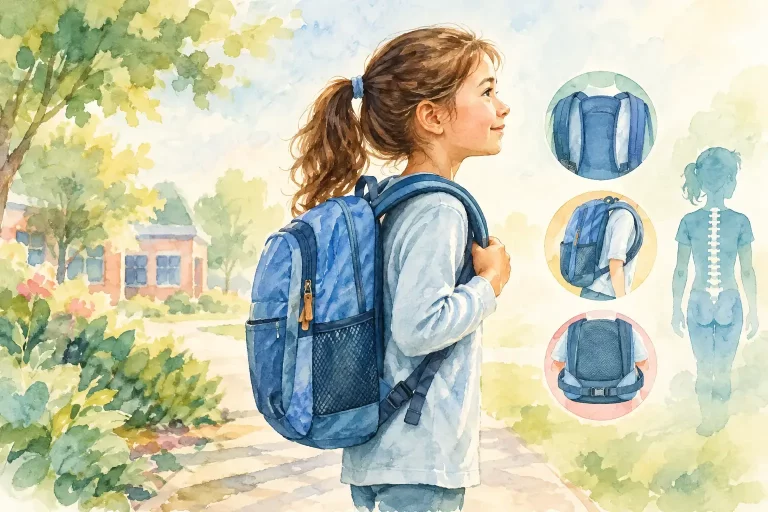
The backpack drop at the front door can tell a story. A child leans forward to counterbalance a heavy bag, slips one strap off before they are even inside, or mentions a sore neck after a long school day. Child backpack ergonomics is not about finding a perfect bag or creating another thing for parents to worry about. It is about making a simple daily routine more supportive of a growing body.
Children’s bodies are wonderfully adaptable, but they are also changing quickly. A backpack that is too heavy, too large, poorly fitted, or packed without thought can place unnecessary stress on the shoulders, upper back, and low back. Small adjustments can make the trip between home, school, the bus, and after-school activities feel much more comfortable.
Why child backpack ergonomics matters
A backpack asks the body to carry weight while walking, climbing stairs, standing in line, and moving through busy hallways. When the load sits close to the body and is shared across both shoulders, the body generally has an easier time managing it. When it hangs low, swings from one shoulder, or pulls a child backwards, they may change the way they stand or walk to compensate.
That does not mean every complaint after school is caused by a backpack. Children can experience aches for many reasons, including growth, sports, long periods of sitting, sleep habits, or an unfamiliar activity. Still, the backpack is one daily factor that families can assess and improve with relative ease.
Watch for practical signs that a bag may not be working well: red pressure marks that linger after it comes off, straps that dig in, frequent shifting or leaning, a child who avoids wearing both straps, or repeated discomfort in the neck, shoulders, or back. These are useful prompts to check the fit and the contents rather than simply telling a child to “stand up straight.”
Start with the right backpack size
The best backpack is not necessarily the biggest one, the trendiest one, or the one a child can grow into for several years. It should fit their body now. A bag that is excessively wide or tall can make it harder to move freely and can encourage the load to sit too low on the back.
Look for a backpack that sits comfortably between the shoulders and the top of the hips. It should not extend far below the waistline, and it should not be wider than the child’s torso. A lighter bag is often a sensible starting point, since the bag itself contributes to the total load before lunch, books, water bottles, and winter gear are added.
Padded, adjustable shoulder straps help distribute pressure more comfortably. Broad straps are generally preferable to narrow straps that can press into the shoulders. A padded back panel may add comfort, particularly when a binder or book has firm edges. For children carrying a fuller load, a chest strap can help keep the shoulder straps in place and reduce slipping. A waist strap may be useful on some bags, although it needs to fit comfortably and be used correctly to offer meaningful support.
Wheels can sound like an easy answer, but they come with trade-offs. A rolling backpack may be helpful for some children and school routines, yet it can be awkward on stairs, in snowy conditions, or in crowded hallways. Pulling it for long distances may also create an uneven movement pattern if the same arm does all the work. Consider the route, the school’s policies, and your child’s ability to manage the bag independently.
Fit the bag after it is packed
A backpack can fit beautifully when empty and poorly once it is loaded. Have your child put on the packed bag using both shoulder straps. Tighten the straps so the bag rests snugly against the middle of the back, without pulling the shoulders up toward the ears or restricting comfortable movement.
The bottom of the backpack should sit around the waist or just above the hips, not against the buttocks. If it hangs low, shorten the shoulder straps. If one strap is longer than the other, the load will be uneven. Check this periodically, especially after a child has worn a bulky coat or adjusted the straps on their own.
Pack for balance, not just capacity
How a backpack is packed can matter nearly as much as how much it weighs. Place the heaviest items, such as textbooks or a full binder, closest to the child’s back. This keeps the centre of mass nearer to the body and helps reduce the pulling sensation that occurs when weight sits at the outer edge of the bag.
Use compartments to keep items from sliding around. A loose water bottle, sports shoes, or lunch container can shift the load as a child walks. When possible, pack only what is needed that day. This may mean reviewing the timetable together, leaving non-essential supplies at school if permitted, or asking whether a digital resource can replace a heavy item.
There is no single number that suits every child because body size, strength, distance travelled, and the way a bag is carried all matter. As a practical guide, many families aim to keep the loaded backpack to about 10 to 15 percent of a child’s body weight. Treat that as a conversation starter, not a pass-or-fail rule. A smaller child walking a long distance may need a lighter load than a larger child taking a few steps from the car to a locker.
If the bag feels difficult for your child to put on independently, causes them to lean noticeably forward, or leaves them uncomfortable at the end of most school days, it is likely time to reduce the load or reconsider the bag.
Build habits that support comfort
The most supportive backpack will not help much if it is carried on one shoulder every day. Encourage your child to use both straps, even for short walks. It may feel less convenient at first, particularly if friends carry bags differently, but it helps share the load more evenly.
A quick evening reset can also prevent a surprising amount of strain. Empty food containers, remove papers that are no longer needed, refill the water bottle only when it is time to leave, and repack according to the next day’s schedule. This is also a valuable opportunity to teach children awareness of what their bodies are carrying.
Movement matters after school, too. Children do not need a complicated exercise program to support their posture. Time spent walking, playing, climbing, stretching, and participating in activities they enjoy can help balance the long periods of sitting common during the school day. The goal is not to hold one rigid “perfect posture,” but to create regular opportunities to move and change position.
When to seek an individual assessment
Pay attention if your child has ongoing neck, shoulder, or back discomfort; tingling or numbness; pain after a fall or injury; weakness; or symptoms that interfere with sleep, school, sports, or normal play. These concerns deserve an appropriate assessment from a qualified health professional. Persistent pain should not be dismissed as a normal part of growing up.
At One Village Family Chiropractic, families can receive gentle, individualized guidance around posture, movement, and musculoskeletal comfort. An assessment can help clarify whether a backpack, daily habits, activity demands, or another factor may be contributing to a child’s discomfort, while giving parents practical next steps that fit real family life.
Your child does not need to carry a heavy load alone. A well-fitted bag, a thoughtful packing routine, and a few minutes of attention each week can help make the school day feel lighter, more comfortable, and more supportive of the growing body inside that backpack.