
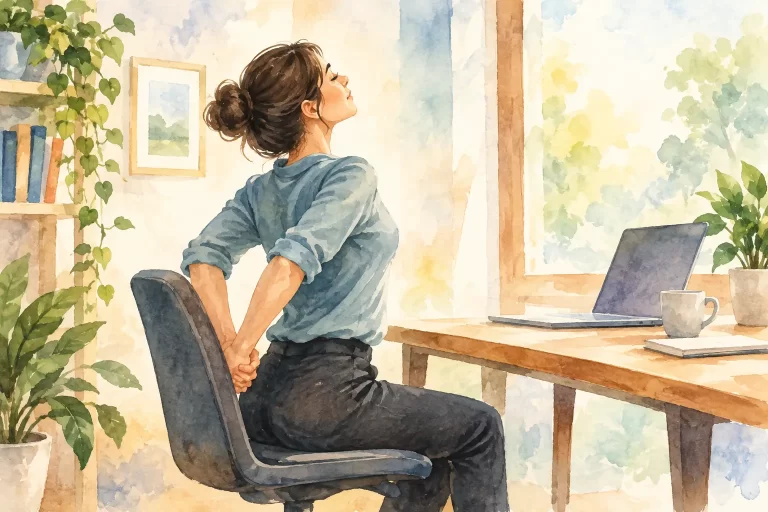
By mid-afternoon, many people notice it: the dull pull across the waistline, hips that feel locked in place, and a back that complains when it is finally time to stand. Desk stretches for lower back comfort can be a simple way to interrupt that pattern. They are not a substitute for assessing persistent pain, but small, consistent movement breaks can help your body feel less stuck during a long workday.
Sitting itself is not the enemy. Our bodies are built to use a variety of positions, and the challenge is often staying in any one position for too long. A supportive chair, a well-positioned screen, and a few minutes of gentle movement throughout the day can make a meaningful difference in how your back and hips feel.
Why sitting can leave your lower back feeling tight
When you sit for extended periods, the muscles around your hips and trunk do less of the work they do during walking, reaching, and changing positions. Your hip flexors may feel shortened, your glutes may become less active, and your mid-back can round forward as you lean toward a screen. The lower back often tries to compensate.
Stress can add another layer. Many people hold tension by gripping through the shoulders, jaw, abdomen, or low back without realizing it. A stretch works best when it is paired with slow breathing and a willingness to move within a comfortable range, rather than forcing your body into a deeper position.
If one stretch feels wonderful for a coworker but uncomfortable for you, that does not mean you are doing it wrong. Bodies, workstations, injuries, pregnancy, activity levels, and daily demands all differ. The goal is not to achieve a perfect shape. It is to give your spine and surrounding muscles a gentle change of input.
Desk stretches for lower back relief during the workday
Try one or two movements every 30 to 60 minutes, or whenever you notice yourself shifting, slumping, or holding your breath. You do not need to complete a long routine at your desk. Short, frequent movement breaks are often more realistic and more helpful than waiting for one perfect workout after work.
Seated pelvic tilts
Sit near the front of your chair with both feet supported on the floor. Slowly tip your pelvis forward so your lower back forms a gentle arch, then tip it backward so your lower back softens slightly toward the chair. Move slowly between these positions five to 10 times.
This is a small movement, not a dramatic one. Pelvic tilts can help you become aware of where your low back is sitting and reduce the feeling of being fixed in one posture. Keep your shoulders relaxed and breathe normally.
Seated knee-to-chest stretch
While seated tall, bring one knee toward your chest and hold behind the thigh or just below the knee. Keep the other foot grounded. Hold for a few calm breaths, then switch sides.
You may feel a gentle stretch through the buttock, hip, or lower back. Avoid pulling hard on the knee or rounding aggressively through your back. If bringing the knee up causes sharp pain or pinching, skip this movement and choose a more comfortable option.
Figure-four hip stretch
Sit securely in your chair and place one ankle across the opposite thigh, just above the knee. Flex the foot of the raised leg gently. Stay upright or hinge forward slightly from the hips until you feel a comfortable stretch in the outer hip or glute.
Hip tension can contribute to a sense of stiffness around the low back, especially after long periods of sitting. This stretch should feel like a broad, manageable pull, not pressure in the knee. If your hips or knees do not enjoy this position, keep both feet on the floor and use another movement instead.
Standing back extension
Stand up from your chair, place your hands on the back of your hips, and gently lean backward a small amount. Pause for a breath, return to neutral, and repeat a few times.
This can be a welcome counter-movement after hunching over a keyboard. Keep the motion controlled and do not push into pain. Some backs prefer bending forward while others feel better with a gentle extension, so let your response guide you.
Supported forward fold
Place your hands on your desk or the back of a sturdy chair and step back until your arms are straight. Hinge at your hips, allowing your chest to move toward the floor while keeping a soft bend in your knees. Your spine can lengthen naturally as you breathe into the sides and back of your ribcage.
This movement often feels good through the shoulders, mid-back, hamstrings, and low back at once. Keep the desk stable and avoid it if the position increases symptoms, causes dizziness, or makes you feel unsteady.
Gentle standing side reach
Stand with your feet about hip-width apart. Reach one arm overhead and lean slightly to the opposite side, keeping your chest open and your shoulders away from your ears. Take two or three easy breaths, then change sides.
Side bending is an overlooked part of daily movement. Because desk work tends to keep us directly facing forward, a gentle reach can give the muscles along the sides of the trunk a useful change of position.
Short walking reset
Sometimes the most effective stretch is simply a change of scenery. Walk to refill your water, take a lap around the office, climb a flight of stairs, or move around the house for two minutes between tasks. Let your arms swing naturally.
Walking asks your hips, legs, core, and spine to coordinate in a way that sitting does not. It also gives your eyes and nervous system a break from sustained screen focus. If you work from home, use routine moments such as boiling the kettle or sending a file to the printer as reminders to stand up.
Make your workstation work with your body
Stretching is more useful when your workspace is not repeatedly pulling you into an awkward position. Start with the basics: let your feet rest firmly on the floor or on a stable footrest, position your screen near eye level, and bring your keyboard and mouse close enough that you are not reaching forward all day.
Aim for a chair height that allows your hips and knees to feel comfortable, rather than forcing a rigid 90-degree rule. A small cushion or rolled towel behind the low back may feel supportive for some people, while others prefer a more open seat that lets them shift positions easily. It depends on your body and your task.
The best posture is often the next posture. Even an ergonomically arranged workstation cannot make eight uninterrupted hours of sitting ideal. Build movement into your calendar the same way you would schedule a meeting. A quiet timer, a note on your monitor, or a recurring cue after each video call can help make it automatic.
When lower back discomfort needs more than stretching
Gentle movement may help common stiffness, but it should not be used to push through concerning symptoms. Seek timely medical attention if back pain follows a significant fall or collision, is severe or rapidly worsening, or comes with fever, unexplained weight loss, new bowel or bladder changes, numbness around the groin, or increasing weakness in a leg.
It is also wise to seek an assessment when discomfort keeps returning, limits your sleep or daily activities, or travels down the leg with tingling or numbness. A personalized evaluation can help identify movement habits, joint restrictions, muscle tension, or workstation factors that may be contributing. At One Village Family Chiropractic, care is centred on understanding the whole person and creating a gentle, individualized plan that supports better movement over time.
For expectant mothers, desk discomfort may change as the body changes. A wide stance, frequent position changes, and extra support under the feet can be more comfortable than trying to maintain one posture. Any exercise or stretch should feel steady and appropriate for your individual stage of pregnancy and health history.
Your lower back does not need a punishment routine after a day at the desk. It needs regular, kind reminders that it is made to move. Start with one stretch, one short walk, and one moment of slower breathing today. Those small choices can become a practical way to care for your body between all the things your day asks of you.