
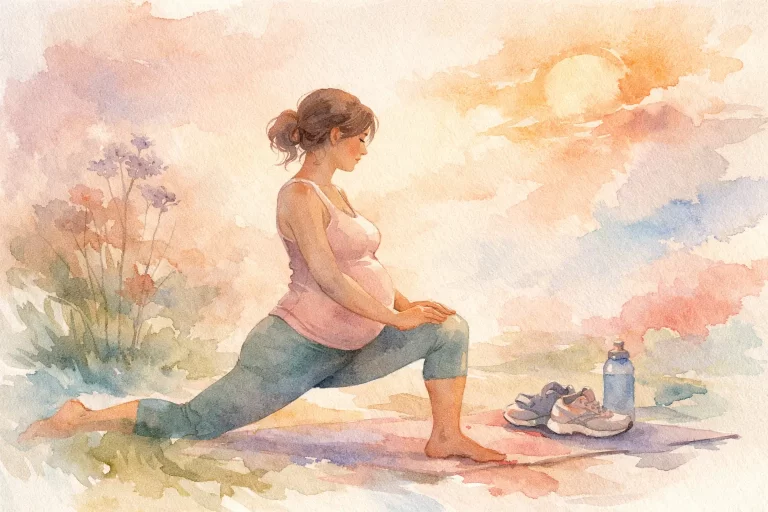
Pregnancy asks your body to adapt quickly and continuously. A guide to healthy pregnancy movement is not about pushing through fatigue, chasing a fitness goal, or following someone else’s routine. It is about staying connected to your changing body, building practical strength, and finding movement that helps you feel more supported in daily life.
For many expecting parents, the question is not whether movement is beneficial. It is how to move when your energy, balance, posture, sleep, and comfort can change from one week to the next. The most helpful answer is usually gentle, individualized, and flexible.
Why healthy pregnancy movement matters
As pregnancy progresses, your centre of gravity shifts, joints may feel less stable, and the muscles around your hips, pelvis, upper back, and core take on different demands. Everyday tasks such as getting out of bed, carrying groceries, climbing stairs, sitting at a desk, or lifting a toddler can begin to feel surprisingly demanding.
Regular movement can help you maintain mobility, circulation, strength, and body awareness. It can also provide a reassuring opportunity to check in with how you are feeling, rather than moving on autopilot. The goal is not to make pregnancy look effortless. The goal is to help your body meet its daily demands with more confidence and less strain.
For many people with uncomplicated pregnancies, Canadian guidance supports working toward about 150 minutes of moderate-intensity physical activity per week, spread over several days. That does not need to mean long workouts. A few short walks, a prenatal class, mobility work, or strength sessions throughout the week can all contribute. Your midwife, physician, or obstetric care provider can help you determine what is appropriate for your individual pregnancy.
Start with your real life, not an ideal routine
The best movement plan is one you can return to consistently. If a 30-minute class feels unrealistic between work, nausea, family responsibilities, and appointments, begin with 10 minutes. A walk around the block after dinner, a few supported squats while the kettle boils, or gentle mobility before bed all count.
Think about the moments that challenge you most. If prolonged sitting leaves your upper back tight, brief movement breaks may be more useful than one intense workout each weekend. If stairs make your legs feel tired, gradual lower-body strengthening may help you feel steadier. If you are caring for another child, practice lifting and carrying with attention to your breath, posture, and footing.
Consistency matters more than intensity. Some days, your body may welcome a brisk walk or a strength-focused session. On other days, a slower stretch, an easy swim, or a few minutes of breathing and mobility may be exactly right. Adjusting is not giving up. It is responsive care.
Choose movement that builds confidence
Walking is often one of the most accessible options during pregnancy because it is easy to adapt to your energy level and schedule. Supportive footwear, a manageable pace, and shorter routes can make it more comfortable as your body changes.
Strength work is also valuable because pregnancy and parenthood involve plenty of functional lifting, carrying, bending, reaching, and standing. Simple movements such as supported squats, step-ups, rows with a resistance band, wall push-ups, and light carries can help build capacity for everyday life. Focus on controlled form rather than heavier loads or maximum effort.
Mobility work can support comfortable movement through your hips, upper back, ankles, and shoulders. Rather than forcing a deep stretch, use a gentle range that feels steady and comfortable. Pregnancy-related changes can make joints feel more flexible, but more range is not always better. Stability, control, and ease are the priorities.
Low-impact options such as swimming, stationary cycling, and prenatal yoga may be a good fit for some people. The right choice depends on your previous activity level, symptoms, access, and preferences. A movement practice you genuinely enjoy is often easier to sustain than the one that appears most impressive.
A simple intensity check
Moderate movement should generally leave you breathing more deeply while still able to speak in short sentences. You do not need to be exhausted for movement to be worthwhile. If you are new to exercise, returning after a break, or managing pelvic, back, or joint discomfort, beginning at a lower intensity and progressing gradually is often the wisest approach.
Hydration, comfortable clothing, and avoiding overheating matter too, especially during warmer Edmonton days or indoor classes with limited airflow. Give yourself permission to pause, rest, or change the plan.
Support your core with breath and coordination
During pregnancy, “core strength” is not about flattening your stomach or holding tension all day. Your core works as a coordinated system that includes your diaphragm, abdominal wall, back, hips, and pelvic floor. Breathing is an essential part of that system.
Try noticing your breath during effort. As you stand from a chair, lift a bag, or perform a squat, exhale gently rather than holding your breath. Let your ribcage expand as you inhale, and avoid bracing so forcefully that your shoulders rise or your jaw clenches. This can help you move with more awareness and less unnecessary tension.
Pelvic floor exercises are not one-size-fits-all. Some people benefit from learning how to contract and relax these muscles, while others may already be holding too much tension. If you experience pelvic heaviness, pressure, pain, leaking, or difficulty relaxing, a pelvic health physiotherapist can provide individualized guidance.
Adapt as each trimester changes
Your movement needs may shift throughout pregnancy, and that is normal. Early on, nausea and fatigue may be the main barriers. In the middle months, you may have more energy but notice changes in balance and posture. Later, shorter, more frequent bouts of movement may feel better than a single longer session.
As your belly grows, give yourself room to move differently. Widen your stance when needed, use a chair or wall for support, and slow down transitions from the floor to standing. If lying flat on your back makes you dizzy, nauseated, short of breath, or uncomfortable, change positions. Side-lying, seated, standing, or inclined variations may feel better.
There is no prize for doing an exercise exactly as you did before pregnancy. A modified movement that feels stable and supported is often the stronger choice.
Know when to pause and seek guidance
Movement should leave you feeling appropriately worked, not unwell. Stop exercising and contact your maternity care provider promptly if you experience vaginal bleeding, fluid leakage, chest pain, faintness, severe shortness of breath, persistent painful contractions, calf pain or swelling, or a significant change in how you feel.
Less urgent discomfort still deserves attention. Ongoing low back pain, hip pain, pelvic pain, numbness, or pain that changes how you walk can make movement feel intimidating. You do not have to simply accept it as part of pregnancy. Your healthcare team can help identify suitable modifications and supports.
A prenatal chiropractor can also assess how your spine, pelvis, posture, and movement patterns are responding to pregnancy-related physical changes. At One Village Family Chiropractic, care is gentle and individualized, with attention to musculoskeletal comfort, mobility, and practical strategies that fit your daily life. Chiropractic care works best as one part of a collaborative care team that may include your midwife, physician, physiotherapist, massage therapist, or exercise professional.
Make movement feel kind, not demanding
A helpful guide to healthy pregnancy movement should leave room for real life. You may have a week where walking feels wonderful, followed by a week when rest and gentle mobility are more realistic. Both can be part of caring well for yourself.
Choose one or two movements that help you feel more at home in your body, then return to them often. Your body is doing meaningful, demanding work. Meeting it with patience, support, and steady movement is a powerful way to care for yourself through every changing season of pregnancy.