
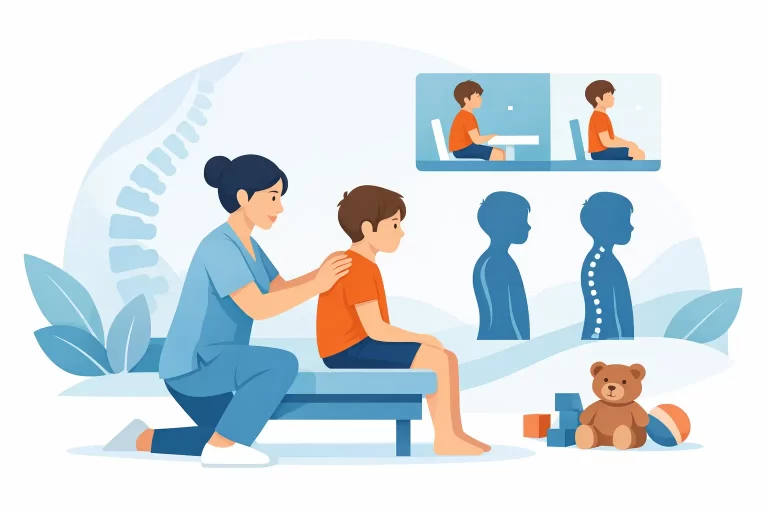
You notice it in small moments first – your child slumping over homework, leaning heavily to one side on the couch, or craning their neck toward a tablet. Posture changes can sneak in quietly, which is why many parents start asking whether a chiropractor for kids posture concerns is the right next step. It is a fair question, and the answer depends on what is driving the pattern, how long it has been there, and how your child is functioning overall.
Posture is not just about standing up straight for a photo. In children, it is connected to growth, movement habits, muscle balance, coordination, breathing, energy, and the way the spine and nervous system work together. That does not mean every slouch is a problem, and it does not mean your child needs perfect posture all day long. It does mean that when posture looks persistently uneven, strained, or uncomfortable, it is worth paying attention.
When posture in kids deserves a closer look
Children move through rapid stages of growth, and their bodies are constantly adapting. A temporary awkward phase is common. But there is a difference between normal developmental change and a pattern that keeps showing up.
Parents often notice rounded shoulders, a forward head position, one shoulder sitting higher than the other, frequent fidgeting when sitting, or complaints of neck, back, or hip discomfort. Some children avoid certain positions, get tired during seated tasks, or seem uncomfortable after sports, backpacks, or screen time. Others do not complain at all, but their posture looks strained enough that parents know something is off.
That is usually the moment to get more curious, not more alarmed. Posture is influenced by many things: growth spurts, weak core stability, tight muscles, sports asymmetry, old falls, prolonged sitting, poorly fitted workstations, heavy bags, and stress patterns in the body. Sometimes it is mostly habit. Sometimes it reflects deeper tension or imbalance.
What a chiropractor for kids posture concerns actually looks at
A gentle pediatric assessment is about more than telling a child to sit straighter. It looks at how your child moves, where they hold tension, how their spine and pelvis are aligning, and whether certain areas are compensating for others.
When a chiropractor for kids posture issues evaluates a child, the goal is not to force the body into a rigid position. The goal is to understand function. Is the head sitting forward because the upper back is stiff? Is one hip rotating differently than the other? Is a child slouching because their body lacks endurance, or because sitting still feels uncomfortable?
That broader view matters. Good posture is not a single pose. It is the ability to move well, rest well, and return to balanced positioning without strain. For kids especially, resilience matters more than perfection.
In a family-centred clinic, care is also tailored to age, stage, and comfort. A six-year-old and a thirteen-year-old may both have posture concerns, but the reasons and approach can look very different.
Can chiropractic care help kids with posture?
In many cases, yes – but not as a magic fix.
Chiropractic care may help improve posture by supporting spinal and joint mobility, reducing tension patterns, and helping the body move more evenly. If a child has been compensating around stiffness or imbalance, gentle care can create a better foundation for healthier movement. That can make it easier for them to sit, stand, play, and grow with less strain.
At the same time, posture is rarely changed by one adjustment alone. It often improves through a combination of gentle chiropractic support, awareness, movement habits, appropriate strengthening, and changes to the child’s daily setup. That is why education matters so much.
There is also an important trade-off to understand. If posture concerns are related to a structural issue, a medical condition, or significant scoliosis, chiropractic care may be only one part of the picture. In those cases, collaborative care and proper assessment are essential. Families deserve honest guidance, not overpromises.
Signs your child may benefit from a posture assessment
Some children are simply growing through a phase. Others show signs that their body could use support.
A posture assessment may be worth considering if your child has recurring neck or back tension, leans to one side consistently, tires quickly while sitting, seems unusually stiff, resists physical activity they used to enjoy, or complains after school, sports, or screen time. It can also be helpful if you notice asymmetry in their shoulders or hips, or if their posture seems to be affecting confidence, focus, or comfort.
You do not need to wait until pain becomes intense. Many parents seek care because they want to support healthy development early, before small compensations become more established.
What gentle pediatric chiropractic care feels like
This is one of the biggest concerns parents have, and understandably so. Pediatric chiropractic care should be gentle, specific, and adapted to the child in front of the practitioner.
For posture-related concerns, care may involve light hands-on adjustments, movement-based assessment, and recommendations for home support. The amount of pressure used for a child is very different from adult care. In many cases, it is as gentle as the pressure you would use to test the ripeness of a peach.
Children should feel safe, heard, and comfortable throughout the process. A good visit includes conversation with parents, clear explanation, and a plan that makes sense for the child’s age and needs. The purpose is not to rush treatment. It is to build trust and support function over time.
Everyday habits that shape posture
If you are concerned about posture, what happens between visits matters just as much as what happens in the clinic.
Screen time is a common factor, but it is not the only one. Long periods of sitting, reading in bed with the head pushed forward, oversized backpacks, lack of movement breaks, and sports that load one side of the body can all influence posture patterns. So can poor sleep positioning and stress.
The answer is not constant correction. Most kids tune out repeated reminders to sit up straight. What helps more is building an environment that supports better movement naturally.
That might mean raising a device to eye level, making sure feet can rest on the floor during homework, using lighter backpacks with both straps, encouraging active play, and breaking up long seated periods. Sometimes small shifts done consistently create meaningful change.
Why posture is connected to more than appearance
Parents often ask about posture because of how it looks. What matters more is how it feels and functions.
A child who is always collapsed through the chest may breathe more shallowly. A child carrying tension through the neck and shoulders may have more discomfort with schoolwork or headaches after long days. A child whose body is compensating around imbalance may move less efficiently in sports or tire faster than expected.
This is where a whole-body approach becomes helpful. Posture reflects patterns in the musculoskeletal system, but it also interacts with nervous system regulation, confidence, energy, and resilience. When the body is under less physical strain, children often move more freely and comfortably.
That does not mean posture must become another thing for parents to worry about. It simply means that posture can be a useful window into how a child’s body is adapting.
Choosing a chiropractor for kids posture support
Not every chiropractor works with children regularly, and that matters. If you are seeking a chiropractor for kids posture concerns, look for someone experienced in pediatric care, comfortable with age-specific assessment, and willing to explain what they are seeing in clear language.
You want a practitioner who sees your child as an individual, not a posture problem to be fixed. Good care should feel collaborative. It should include realistic expectations, gentle techniques, and practical support for home. It should also acknowledge when something falls outside chiropractic scope and another type of evaluation is needed.
For families in Edmonton, One Village Family Chiropractic takes that kind of supportive, education-led approach seriously. The goal is to help children grow with better function, not simply to chase symptoms.
What parents can do right now
If your child’s posture has been on your mind, start by observing without overcorrecting. Notice when the posture shows up most. Is it after school, during screens, in sports, or all the time? Does your child seem uncomfortable, fatigued, or limited in any way?
From there, focus on simple wins: regular movement breaks, a better homework setup, lighter carrying loads, and more varied movement through the day. If the pattern looks persistent, uneven, or uncomfortable, a professional assessment can help clarify whether it is a habit, a mobility issue, a growth-related adaptation, or something that needs closer attention.
Children do not need perfect posture. They need support, space to grow, and a body that can adapt well to the demands of childhood. Sometimes the most helpful next step is not another reminder to stand up straight. It is understanding what your child’s body has been trying to tell you all along.