
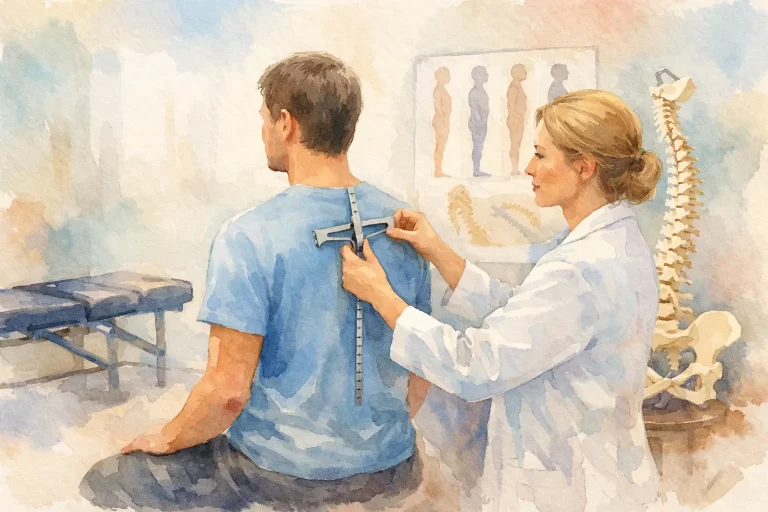
A spinal assessment is not a test you need to “pass.” It is a conversation and a careful look at how your body is moving, adapting, and responding to the demands of everyday life. If you are wondering what happens during spinal assessment, you can expect a gentle, individualized process designed to help your chiropractor understand your concerns and recommend appropriate next steps.
For some people, that concern is a stiff neck after long days at a desk. For others, it may be low-back discomfort while lifting a toddler, hip tension during pregnancy, recurring headaches, poor posture, or a feeling that movement simply is not as easy as it used to be. A thorough assessment helps connect the dots between your health history, movement patterns, spinal function, and goals.
What happens during spinal assessment?
Your first visit typically begins before any hands-on examination. Your chiropractor will take time to listen. This matters because two people can describe the same area of discomfort but have very different histories, physical demands, and care needs.
You may be asked when your concern began, what makes it better or worse, whether it affects sleep, work, exercise, caregiving, or daily movement, and what you have already tried. Your chiropractor may also ask about past injuries, surgeries, medications, general health history, and any relevant family health information.
This conversation is also where you can share what you hope to get from care. Perhaps you want to return to walking comfortably, feel more confident lifting your baby, move with less restriction, or build a proactive plan that supports long-term spinal health. There is room for all of those goals.
Screening for safety first
A responsible assessment includes screening for signs that require a different type of care, further investigation, or referral to another health professional. This may include questions about recent significant trauma, unexplained changes in symptoms, fever, severe or progressive weakness, or changes in bowel or bladder control.
Most back and neck concerns are not emergencies, but safety always comes first. If your history or examination points to something outside the scope of chiropractic care, your chiropractor can explain why additional medical assessment is appropriate. This is a meaningful part of patient-centred care, not a setback.
Looking at posture, movement, and function
After your history, the physical assessment begins. You may be asked to stand, walk, sit, bend, turn, reach, or perform other simple movements. These are not athletic tests. They give your chiropractor useful information about how your spine, joints, muscles, and nervous system are working together.
Posture may be observed from the front, side, and back. Your chiropractor is looking for patterns rather than judging how you stand. For example, they may notice that one shoulder sits higher, that your head tends to rest forward, or that your pelvis shifts to one side. These findings do not automatically mean something is seriously wrong. Bodies adapt in many ways, and posture is only one piece of a larger picture.
Range-of-motion testing often follows. You might gently bend forward and backward, turn your head, rotate through your mid-back, or move your hips. Your chiropractor will note where movement feels limited, uncomfortable, or uneven. They may compare right and left sides and ask you to describe the quality of any sensation you feel.
Function matters just as much as flexibility. Someone may have a full range of motion yet struggle with a particular activity, while another person may move less in one direction but have no pain or limitations. The goal is not to force every body into an identical range. It is to understand what is meaningful for you and what may support more comfortable, confident movement.
Gentle hands-on examination
Your chiropractor may use palpation, which means feeling the muscles, joints, and tissues around the spine with their hands. This can help identify areas of tenderness, muscle tension, joint restriction, swelling, or asymmetry.
They may assess how individual spinal segments move and how surrounding areas are contributing. A sore low back, for example, does not always mean the low back is the only area worth examining. Hip mobility, mid-back movement, core control, workplace habits, sleep position, and previous injuries can all influence how the body shares load.
Depending on your symptoms, the examination may also include basic neurological and orthopaedic tests. These can involve checking reflexes, sensation, muscle strength, balance, or specific movements that help clarify which tissues may be irritated. Tests should be explained in plain language, and you should always be told what to expect before they are performed.
For children, the assessment is adapted to their age, development, comfort, and ability to participate. It is often play-based, gentle, and paced carefully. For expectant mothers, positioning and examination techniques are modified to support comfort and safety as the body changes.
When technology or imaging may be considered
Modern assessment tools can sometimes add useful information, particularly when tracking posture, movement, or progress over time. However, technology is most valuable when it supports – rather than replaces – a thoughtful history and physical examination.
Imaging such as X-rays is not necessary for every person with back or neck discomfort. Your chiropractor will consider your history, clinical findings, previous imaging, and established guidelines before recommending it or referring you for imaging. The decision depends on the situation. In many cases, a clear history and hands-on assessment provide enough information to begin a conservative plan of care.
If imaging has already been completed, bring the report or let the clinic know where it was performed if possible. Your chiropractor can consider those findings alongside what your body is doing now. An image is one snapshot, while your assessment considers your current symptoms, movement, function, and goals.
Understanding your findings together
At the end of the assessment, you should not be left wondering what the chiropractor found. A helpful practitioner will explain their clinical impression in language that makes sense to you. They may discuss areas of restricted movement, irritated tissues, postural habits, muscle imbalance, or movement strategies that could be contributing to your discomfort.
This is also the time to ask questions. You might ask what activities are safe to continue, whether you should modify exercise, what to expect after care, or how long improvement may take. Honest answers are better than promises. Recovery can depend on the nature and duration of the issue, your work and home demands, stress, sleep, activity level, and how consistently you can follow the recommended plan.
At One Village Family Chiropractic, care recommendations are intended to be individualized, not one-size-fits-all. Your plan may include gentle chiropractic adjustments or mobilization, soft-tissue approaches, posture guidance, movement or strengthening exercises, and practical recommendations for daily activities. Sometimes the most helpful next step is co-management or a referral to another provider.
What a care plan may look like
A care plan should be connected to your findings and your priorities. If you have a recent flare-up that makes turning your head difficult, the initial focus may be comfort, gentle movement, and helping you return to daily activities. If you are seeking longer-term structural wellness, the conversation may include movement habits, ergonomics, strength, recovery, and periodic reassessment.
Your chiropractor should explain the proposed frequency of visits, why it is being recommended, and how progress will be measured. Progress is not only about pain scores. It can also include sleeping more comfortably, getting through a workday with less tension, carrying your child with greater ease, moving more freely, or returning to activities you enjoy.
Care plans can change. If your body responds quickly, your needs may shift. If progress is slower than expected, your chiropractor should reassess the plan, consider other contributing factors, and discuss whether another type of support would be useful. Good care stays responsive to the person in front of it.
How to prepare for your appointment
Wear comfortable clothing that allows you to move easily. Bring a list of medications, relevant health records if you have them, and any questions you want answered. If you are booking for your child, bring anything that helps them feel settled, such as a favourite toy, snack, or comfort item.
You do not need to know the correct medical words or arrive with a perfect explanation. Describing what you feel, when you notice it, and how it affects your life is enough. The assessment is there to help create clarity.
Your body carries the evidence of your routines, responsibilities, injuries, and adaptations. A spinal assessment offers a calm place to understand that story, make informed choices, and take a supportive next step toward moving through life with greater ease.