
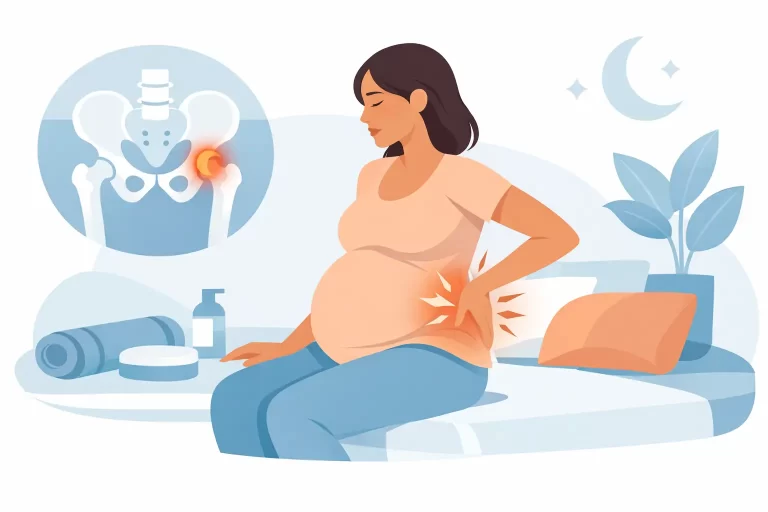
Rolling over in bed should not feel like a full-body project, yet for many expectant mothers, hip pain shows up exactly there – at night, during walks, while getting dressed, or after sitting too long. If you are looking for help for pregnancy hip pain, you are not imagining it, and you are certainly not alone. Hip discomfort in pregnancy is common, but common does not mean you have to simply push through it.
Pregnancy changes the way your body moves, supports weight, and adapts to a growing baby. As your centre of gravity shifts, your pelvis and low back take on more work. Hormonal changes can also increase ligament laxity, which may help prepare the body for birth but can leave the hips and pelvis feeling less stable. Add in tired glutes, altered posture, and interrupted sleep, and it makes sense that the hips often become one of the first places to complain.
Why hip pain happens during pregnancy
Hip pain in pregnancy rarely comes from just one thing. More often, it is a combination of pressure, movement changes, and compensation patterns building over time.
As baby grows, your abdomen moves forward and your posture adapts to keep you upright. That can increase tension through the low back and the muscles around the pelvis. Some women notice aching on the outside of the hips, while others feel pain deep in the buttocks, around the sacroiliac joints, or along the front of the hip crease. For some, it is sharp with certain movements. For others, it is a dull, nagging ache that gets worse by the end of the day.
Sleep position can make things worse too. Side sleeping is often recommended during pregnancy, but if the pelvis is not well supported, the top leg can pull the hip forward and strain the tissues overnight. The result is waking up sore, stiff, and already uncomfortable before the day starts.
There is also an important difference between soreness and instability. Muscle tightness may respond well to stretching, heat, and movement. Joint irritation or pelvic instability often needs a more careful approach. This is where guessing can backfire. What helps one pregnant person feel better may aggravate someone else.
Help for pregnancy hip pain starts with support, not force
The most helpful approach is usually not aggressive stretching or trying to “push through” discomfort. Pregnancy asks for a gentler, more supportive strategy.
Start with the way you rest. If side sleeping hurts, place a pillow between your knees and ankles, and consider another pillow under your belly if it feels heavy. Some women also benefit from hugging a pillow to keep the upper body from twisting forward. The goal is to keep the pelvis more neutral so the hips are not being tugged all night.
During the day, shorten the time you stay in one position. Standing too long, sitting too long, and even walking too far without breaks can all flare symptoms depending on the cause. Small position changes throughout the day often do more than one long stretch session at night.
Footwear matters as well. Supportive shoes can reduce unnecessary strain travelling up from the feet into the knees, hips, and low back. This is especially true if you are spending time on hard floors, chasing older children, or working on your feet.
Movement still matters, but the right kind matters more. Gentle walking, prenatal mobility work, and exercises that improve glute and core support can be very helpful. If a movement causes pinching, sharp pain, or increased pelvic pressure, that is usually a sign to stop and modify rather than force it.
What can safely ease pregnancy hip discomfort?
Many women do well with a mix of home care and hands-on support. Heat can relax tight muscles, especially around the outer hips and low back, as long as it is used moderately and comfortably rather than intensely. A warm bath may also reduce guarding and help you move more easily.
Prenatal massage can be beneficial for muscle tension, but it may not fully address joint mechanics or recurring pelvic stress. Similarly, stretching may feel wonderful if the issue is muscular tightness, but if the body is already dealing with ligament laxity, too much stretching can sometimes leave the area feeling less supported afterward.
That is why personalised care matters. The hips do not work in isolation. They are part of a larger system involving the spine, pelvis, posture, gait, and nervous system. If one area is not moving well, another area often overcompensates.
Gentle prenatal chiropractic care may offer help for pregnancy hip pain by improving motion in the pelvis and spine, reducing mechanical stress, and supporting more balanced function. When care is tailored to pregnancy, the focus is not on force. It is on comfort, safety, and helping your body adapt more smoothly to rapid physical change. In a family-centred practice like One Village Family Chiropractic, that means meeting you where you are, listening closely, and adjusting care to your stage of pregnancy, symptoms, and goals.
When hip pain needs a closer look
Not all pregnancy hip pain is the same, and some signs deserve more attention. If the pain is severe, one-sided and sudden, associated with numbness or weakness, or makes it very hard to walk, it is worth getting assessed promptly. The same is true if pain is accompanied by swelling, fever, or symptoms that feel out of proportion to normal musculoskeletal discomfort.
More commonly, women seek care when the pain keeps recurring despite home strategies. Maybe you feel better after resting, but every walk around the block brings it back. Maybe sleep has become frustrating because each side hurts after a few minutes. Or maybe your body simply feels off balance, and you can tell something is not working as well as it should.
Those are all good reasons to ask for support. You do not need to wait until the pain becomes overwhelming.
A practical daily approach to help for pregnancy hip pain
A steady routine usually works better than occasional big efforts. Think support, not strain.
Start your morning by moving gently before launching into the day. A few supported pelvic tilts, short walks around the house, or simple breathing work can help your body transition out of nighttime stiffness. If getting out of bed hurts, roll to your side first and use your arms to push up rather than twisting sharply.
As the day goes on, pay attention to asymmetrical habits. Standing with weight dropped into one hip, crossing your legs, carrying a toddler on the same side, or always leading with one leg on stairs can all add stress to an already sensitive pelvis. These habits are normal, especially when life is busy, but awareness helps.
If exercise is part of your routine, think stability before intensity. Prenatal strength work for the glutes, deep core, and postural muscles often supports the hips better than deep stretching alone. That said, the right programme depends on your body. If exercise leaves you more sore later, it may need to be modified.
Hydration, rest, and nervous system regulation also play a role. Pain tends to feel louder when sleep is poor and stress is high. That does not mean the pain is “just stress.” It means the body handles discomfort differently when it is depleted. Gentle care, recovery, and calm matter.
Why individualised care makes such a difference
Pregnancy is not a condition to fix. It is a season of rapid change, and your body is doing important work. The goal is not perfection. The goal is helping you move, rest, and function with more ease.
That is why a personalised assessment can be so valuable. Two women can both say, “My hip hurts,” while needing completely different support. One may need soft tissue release and better sleep positioning. Another may need pelvic balancing, movement retraining, and more stability through the core and glutes. Another may simply need reassurance that what she is feeling is common and manageable.
The right care should leave you feeling supported, not rushed. It should make room for questions. It should respect the fact that this body is carrying a baby, managing major change, and still showing up for everyday life.
If your hips are asking for attention, listen early and kindly. Small changes now can make the rest of pregnancy feel far more comfortable. You deserve care that sees the whole picture and helps you feel stronger, steadier, and more at home in your body.