
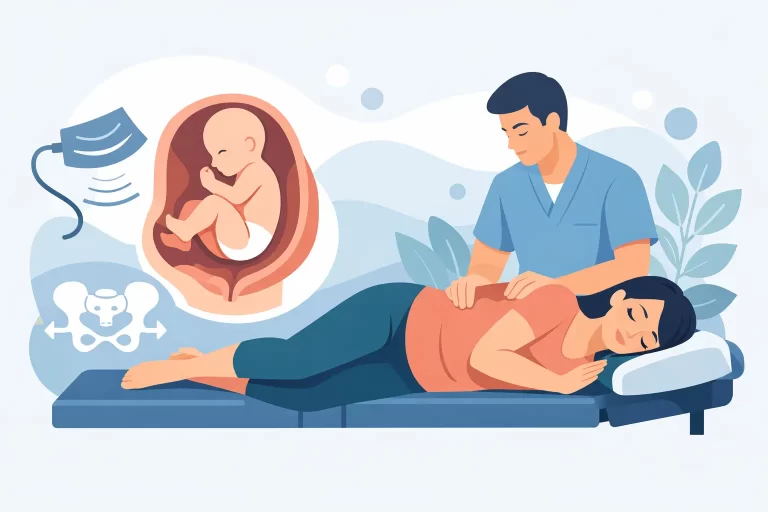
When a baby is still breech late in pregnancy, the conversation can suddenly feel heavy. Many parents are told to watch and wait, consider exercises, or prepare for an external cephalic version, all while carrying the physical strain and emotional weight of uncertainty. That is often when people start asking about the webster technique for breech babies and whether it might help.
The short answer is this: the Webster Technique is a specific chiropractic analysis and adjustment used during pregnancy to support better pelvic balance and reduce tension that may be affecting comfort, movement, and function. It is not a method for manually turning a baby. Instead, it focuses on the mother’s body – especially the pelvis, sacrum, surrounding joints, muscles, and ligaments – with the goal of creating a more balanced environment for the baby.
What is the Webster Technique?
The Webster Technique is a pregnancy-specific chiropractic approach developed to assess and address sacral misalignment and pelvic tension. In practical terms, that means a chiropractor looks at how the pelvis is moving, whether one side is under more strain, and whether supporting muscles and ligaments are creating asymmetry.
During pregnancy, the body changes quickly. Hormonal shifts increase ligament laxity, posture changes as the centre of gravity moves forward, and the pelvis has to adapt to a growing uterus and baby. For some women, those changes happen with relative ease. For others, they come with low back pain, round ligament tension, hip discomfort, pubic symphysis pain, or a feeling that nothing is sitting quite right.
The Webster Technique aims to reduce that pattern of tension and imbalance. That may improve comfort for the mother and may also support more optimal positioning for the baby. The wording matters here. Chiropractors using this technique do not claim to turn breech babies directly. The focus is on restoring function and balance in the pelvis and nervous system so the body can work the way it is designed to.
Webster technique for breech babies: what it may help with
When people hear about the Webster Technique, they often assume it is only used when a baby is breech. In reality, it is commonly used throughout pregnancy to support pelvic alignment, mobility, and comfort. A breech presentation is simply one reason someone may seek care.
If the pelvis is restricted or the surrounding soft tissues are under uneven tension, there may be less freedom for the baby to move into an ideal head-down position. By gently improving joint motion and reducing stress through the muscles and ligaments, chiropractic care may help create more space and balance.
That said, breech positioning happens for many reasons. Sometimes pelvic tension is part of the picture. Sometimes it is not. A baby may remain breech because of uterine shape, placenta location, cord factors, fluid levels, timing, or reasons no one can fully predict. This is one of those situations where it depends, and honest care should make room for that nuance.
What happens during a Webster appointment?
A prenatal chiropractic visit should feel calm, respectful, and tailored to your stage of pregnancy. If a chiropractor is using the Webster Technique, the appointment usually begins with a health history, discussion of symptoms, and an assessment of pelvic balance, posture, and movement patterns.
The chiropractor may check for sacral restriction, pelvic joint imbalance, and tension in the surrounding soft tissues. The adjustment itself is gentle and designed for pregnancy. No force is used on the baby. Positioning is modified to keep you comfortable, often using pregnancy-support cushions or side-lying setups depending on how far along you are.
There is also typically soft tissue work to areas of tension, including the round ligaments or nearby muscles when appropriate. Some people notice immediate relief in their low back, hips, or pelvis. Others feel gradual change over a series of visits. Care plans are individualized because no two pregnancies load the body in exactly the same way.
Is the Webster Technique safe during pregnancy?
For most healthy pregnancies, prenatal chiropractic care is considered gentle and appropriate when provided by a chiropractor trained in pregnancy care. The Webster Technique is specifically designed with pregnant bodies in mind.
Safety always starts with proper screening. A responsible chiropractor will ask about your pregnancy history, current symptoms, medical guidance, and any complications. If there are concerns such as vaginal bleeding, preterm labour risk, preeclampsia, placenta complications, or other red flags, chiropractic care may need to be modified or deferred in coordination with your maternity team.
This is not an either-or choice between chiropractic care and medical care. The best support often happens when families have a collaborative team that may include their chiropractor, midwife, obstetric provider, pelvic floor professional, and other trusted care providers.
Can the Webster Technique turn a breech baby?
This is the question most parents want answered clearly. The Webster Technique does not manually turn a breech baby, and it should not be presented that way.
What it may do is reduce mechanical stress in the pelvis and improve balance in the surrounding structures. If tension or restriction is part of why baby is not settling head-down, then addressing that environment may support spontaneous repositioning. Some babies do turn after care. Some do not.
That can be frustrating to hear, especially when you are looking for certainty. But it is also the most trustworthy answer. No ethical provider should promise a result that depends on many factors outside anyone’s control.
What many mothers do appreciate, even when baby remains breech, is that the care often helps them feel more comfortable, more mobile, and more supported in their body during a stressful stretch of pregnancy.
When should you consider Webster technique for breech babies?
Parents often start looking into breech support around 30 to 36 weeks, especially if baby’s position has been mentioned at a prenatal appointment. But you do not need to wait for a breech label to seek prenatal chiropractic care.
Many women benefit from support earlier in pregnancy, particularly if they are dealing with persistent back pain, hip tightness, pelvic pressure, round ligament discomfort, or a history of difficult pregnancies. Earlier care can help the body adapt more comfortably as pregnancy progresses.
If your baby is breech later in pregnancy, it may be worth having a conversation sooner rather than later. Not because care guarantees a change in position, but because timing can matter when families are weighing options and trying to make informed decisions.
What else may be recommended alongside care?
A thoughtful chiropractor will keep the focus on what is appropriate for your body and your stage of pregnancy. In some cases, that may include simple movement recommendations, breathing strategies, posture changes, or advice on how to rest more comfortably. The goal is not to overwhelm you with homework. It is to support your nervous system, your biomechanics, and your confidence.
If baby remains breech, your provider may also encourage you to continue discussing all available options with your maternity team. That can include monitoring, position-focused exercises, or medical procedures when indicated. Gentle chiropractic care can sit alongside those conversations without replacing them.
Why this approach resonates with many families
Pregnancy can bring a lot of advice, and not all of it feels grounded or supportive. What many parents want is care that is gentle, clear, and centred on the body’s ability to adapt when given the right support.
That is why the Webster Technique resonates with so many families. It respects the intelligence of the pregnant body without making exaggerated promises. It focuses on balance rather than force. It makes room for comfort, function, and nervous system regulation at a time when all three matter deeply.
At One Village Family Chiropractic, that kind of care fits naturally within a family-centred approach to wellness – one that sees pregnancy not as a condition to manage, but as a meaningful season where support, education, and gentle hands can make a real difference.
If you are navigating a breech pregnancy, it is okay to want answers and still need reassurance. The next best step is not always the most dramatic one. Sometimes it is simply choosing care that helps your body feel safer, more balanced, and better supported for whatever comes next.